
Fredrick Mugira
Godfrey Kaparaga Mahuku is 88 years old. He finished his Ordinary Level education in 1960, trained as a teacher in 1980, and served his community in Rwamparara, western Uganda, for most of his adult life. He has outlived three water tools.
He has watched the clay pot and calabash give way to the tin bucket. The tin bucket gave way to the jerry can. And the jerry can, which arrived in his village in 1972, gave way to nothing. It is still here.
THE CLAY POT AND THE CALABASH
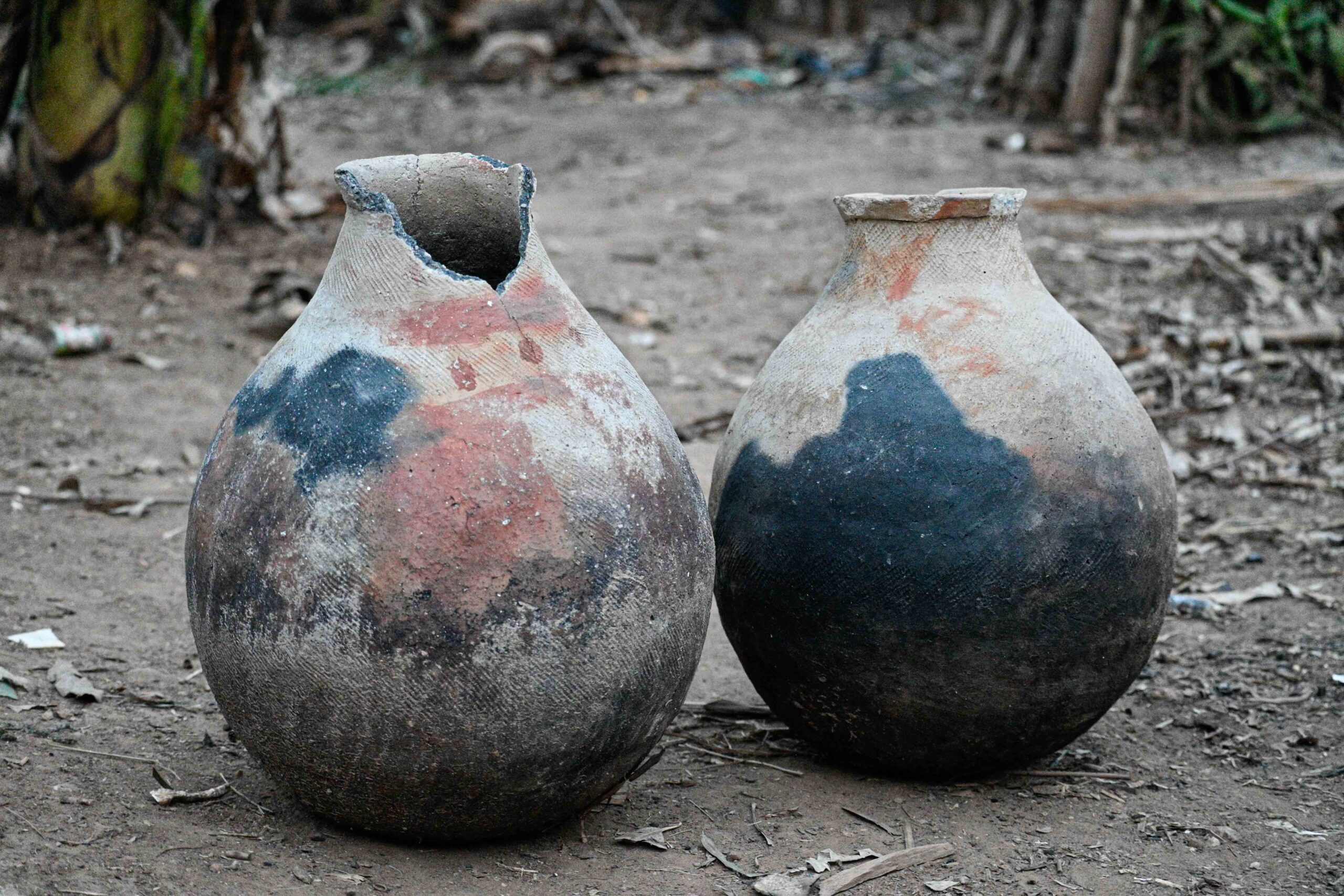
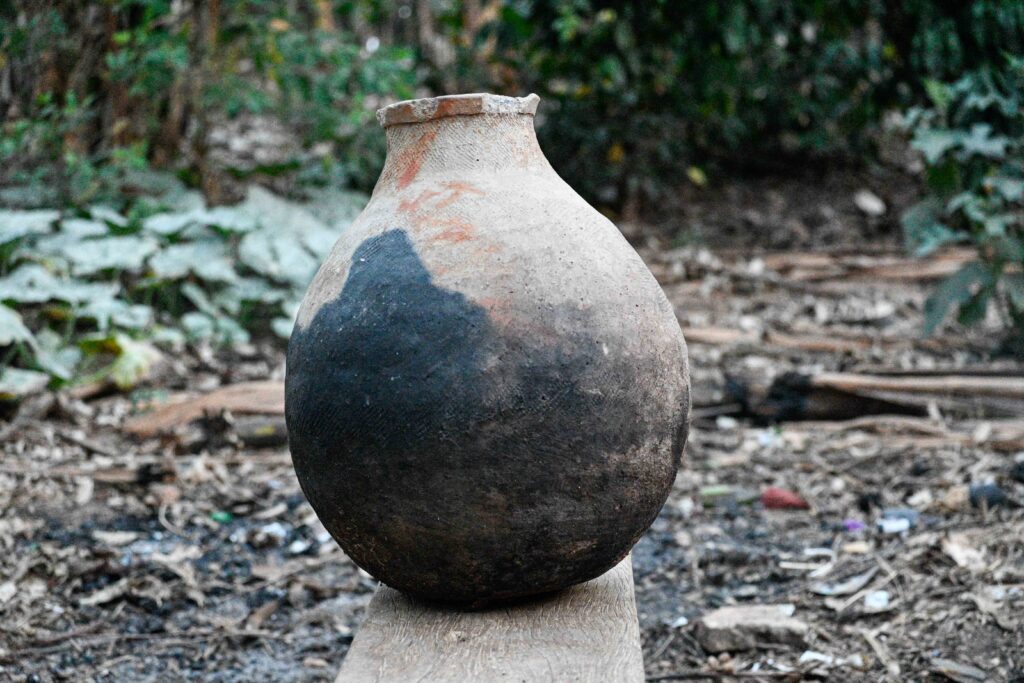


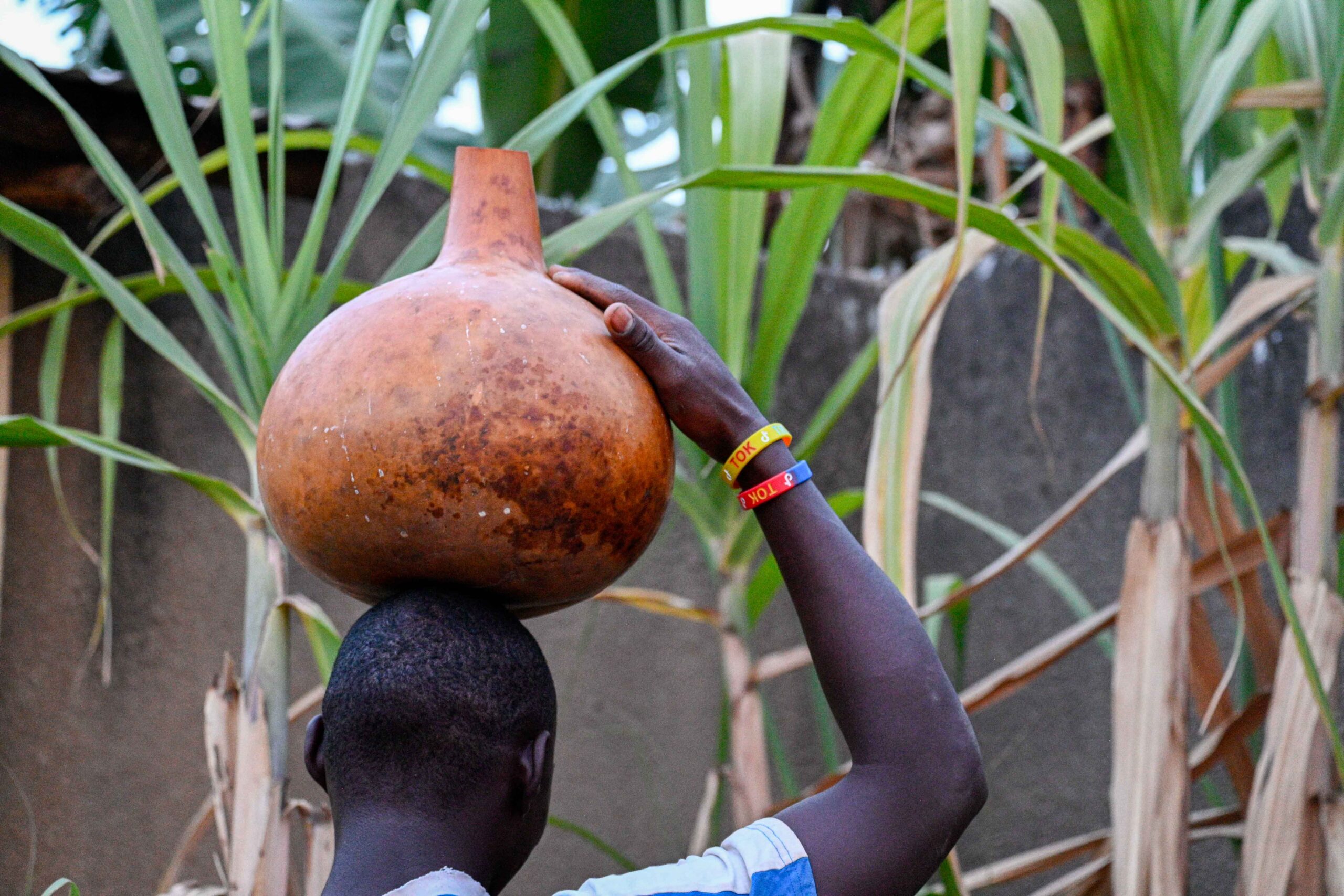


Before the colonialists came to Uganda, Kaparaga’s community in the Rwampara district had their own water system, built, maintained, and understood entirely by the people who depended on it.
At Kabingo, near his homestead, locals had dug wells by hand, some shallow, some deep, all engineered with the community’s safety in mind. “They used not to dig very deep holes in fear that children would drown in them,” Kaparaga explains. “They would dig a reasonable length for the whole village.”
The deeper wells, between five and eight feet deep, were reserved for adults. “They were only used by elders out of fear that children would drown,” he recalls. “And unfortunately, a child would not die alone, because those who tried to rescue them would drown too.”
To prevent accidents at the deeper wells, the community developed its own solution. “They would cut palm trees and cover the well,” Kaparaga says. “Only a small space to collect the water would be left uncovered.”
There were also three main streams in the area. Water, in those years, was not the crisis it would become.
“By the time I started understanding as a child, water was not a big problem in Kakigani,” he says. “Water was available in deep and shallow wells around 1945, when I first saw the colonialists, until independence.”
The tools of that era were the clay pot, which Kaparaga calls entuuba, and enkondo, carefully balanced on the head using woven banana leaves or grass ring called an engata. Young girls used a smaller calabash, lighter and safer for young hands and young heads.


“There were pots used to carry water, only by a woman or a girl who would fetch water to use at home for cooking, bathing, washing, and drinking,” Kaparaga narrates. “Young girls would use small calabashes to fetch water.”
These were sophisticated technologies, developed over generations, adapted to the water sources, distances, and climate of western Uganda. The community made them locally, repaired them locally, and understood them.
“From the Ankole history that I know,” Kaparaga says, “water has never been a problem.”
THE TIN BUCKET

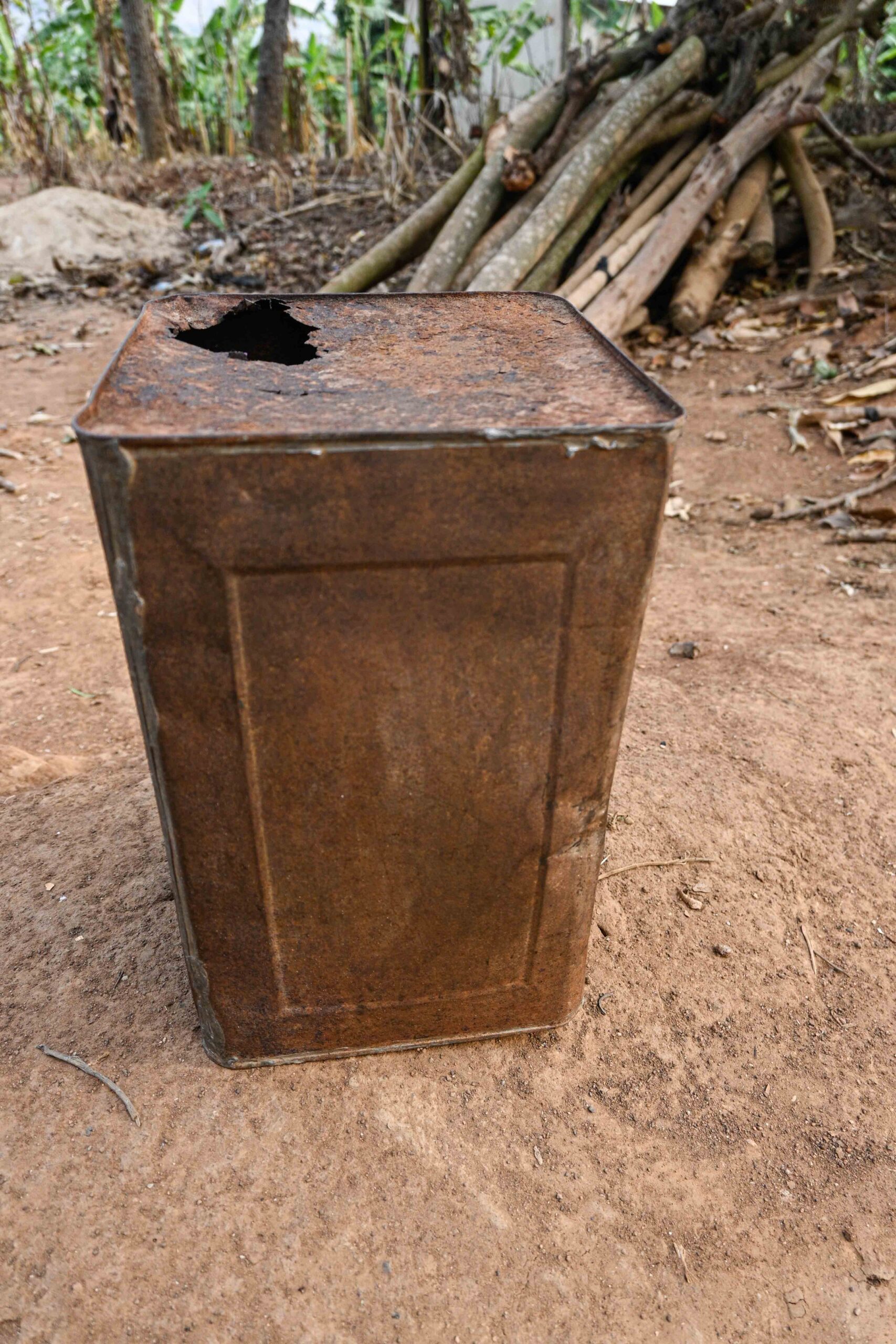

Evidently, the tin bucket was not designed for water. It was a commercial container, used first for storing fuels, oil and other goods traded through colonial supply chains and later repurposed for water collection because it was available, durable, and larger than a clay pot.
It was expensive. But it was bigger, harder to break, and easier to clean. “Everyone wanted one,” Kaparaga says. “We thought it was progress.”
The tin bucket lasted longer than the clay pot. It did not crack if you set it down too hard.
But Kaparaga, looking back at 88, sees something else in that tin bucket. He sees what it was not. It was not a pipe. It was not a tap. It was not infrastructure. It was a better container for the same walk.
The colonial government that brought the tin bucket to his trading center was simultaneously building pipes and taps in the planned settlements, such as Ekijungu in the now-Mbarara city, the settlement for the whites. “They had water in their homes,” notes Kaparaga.
THE JERRY CAN


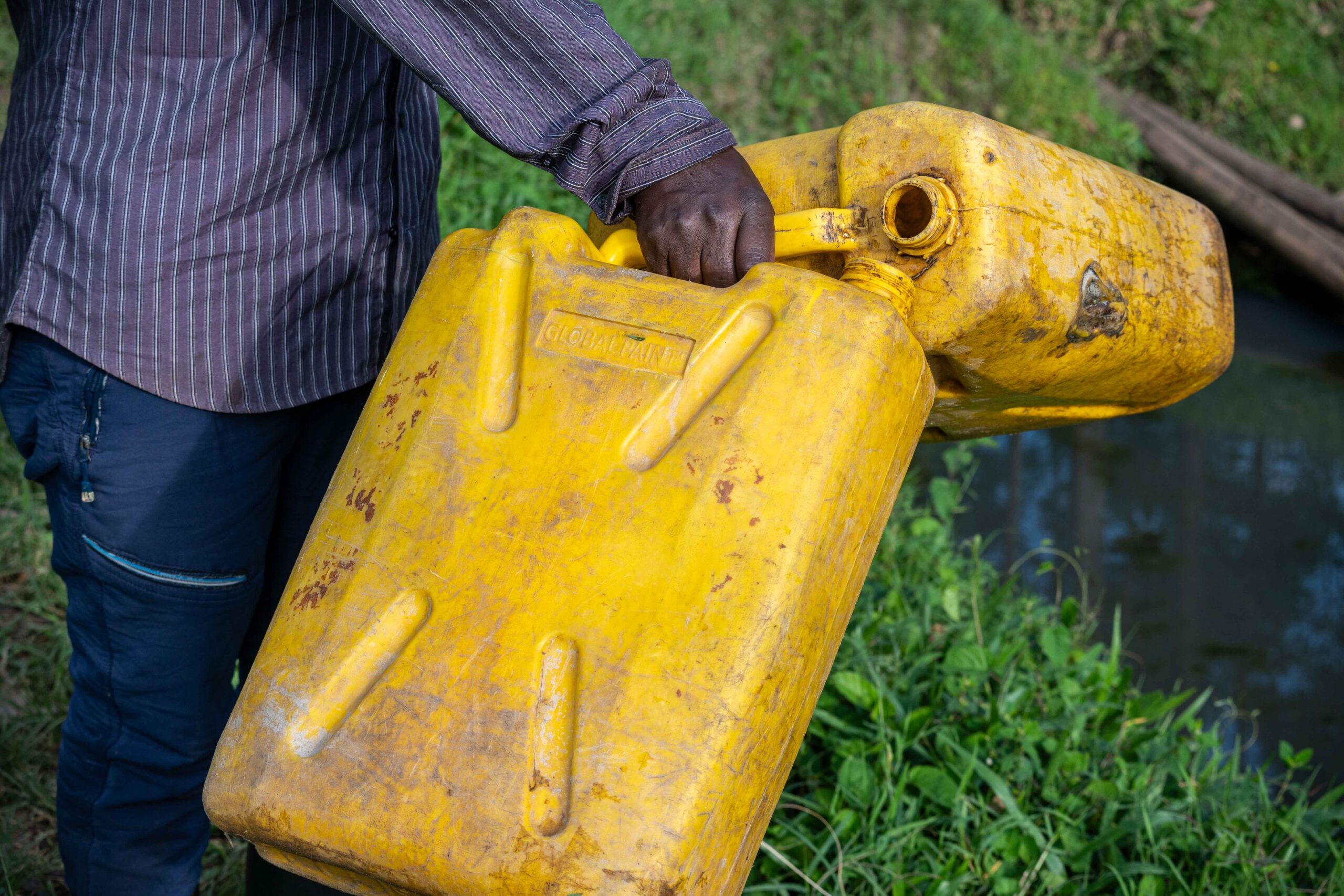
Kaparaga does not remember when the jerry can arrived in his community, but he believes, “they were introduced between the sixties (1960s) and seventies (1970s),” he says. “I first saw a jerrican in 1972, and they contained paraffin fuel in different sizes, ranging from two liters, five liters, to twenty liters, until today.”
Like the tin bucket before it, the jerry can arrived not as a water container but as something else entirely. It was a fuel container, originally designed for military use, repurposed first for paraffin and then, gradually, for water.
According to Kaparaga, the jerry can was practical in ways the tin bucket was not. It was lighter when empty. It had a handle and a cap. You could strap it to a bicycle, and it did not rust.
The women of Kaparaga’s village adopted it quickly. Within a few years, the tin bucket had largely disappeared from water collection, and the jerry can was everywhere.
STILL WAITING
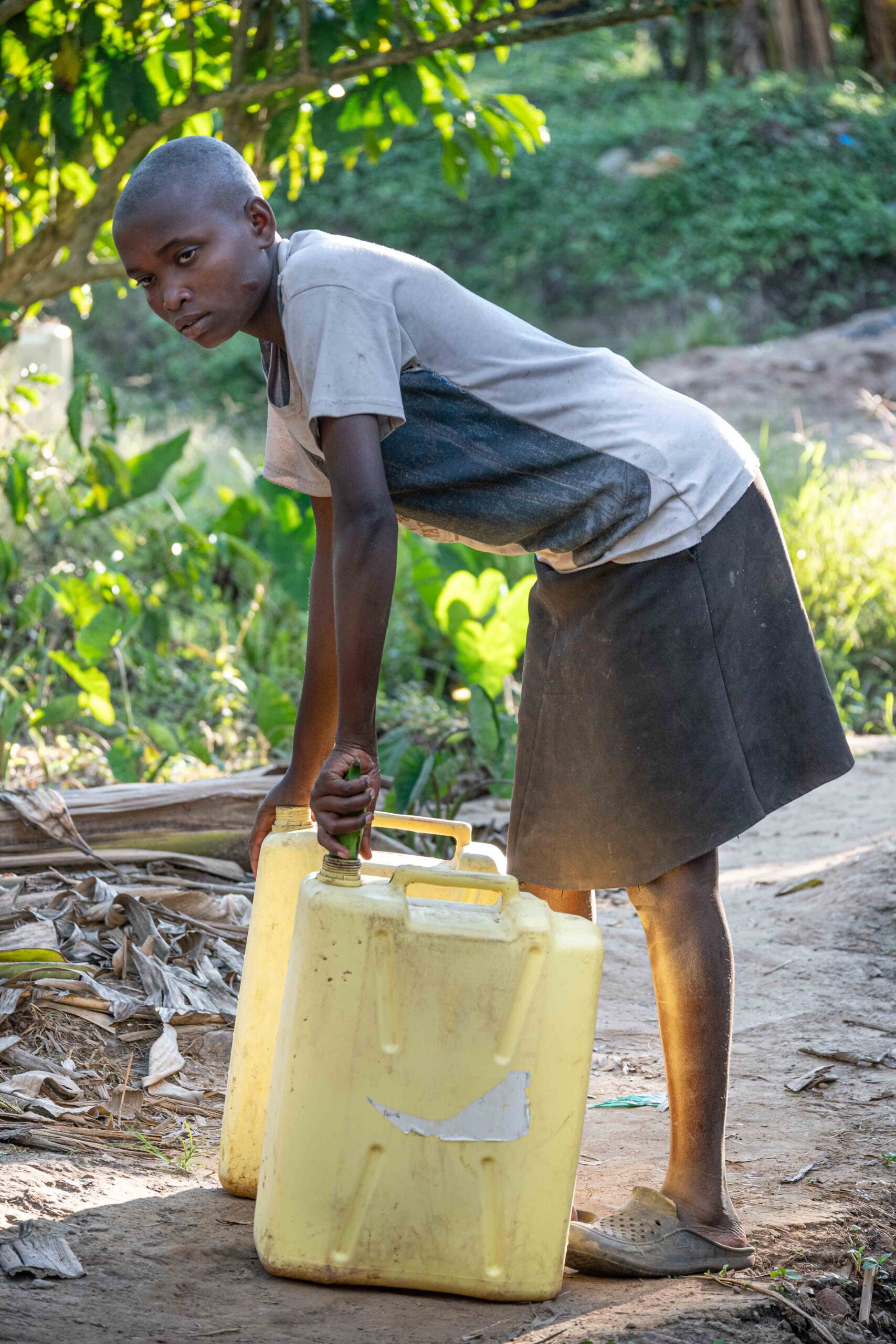

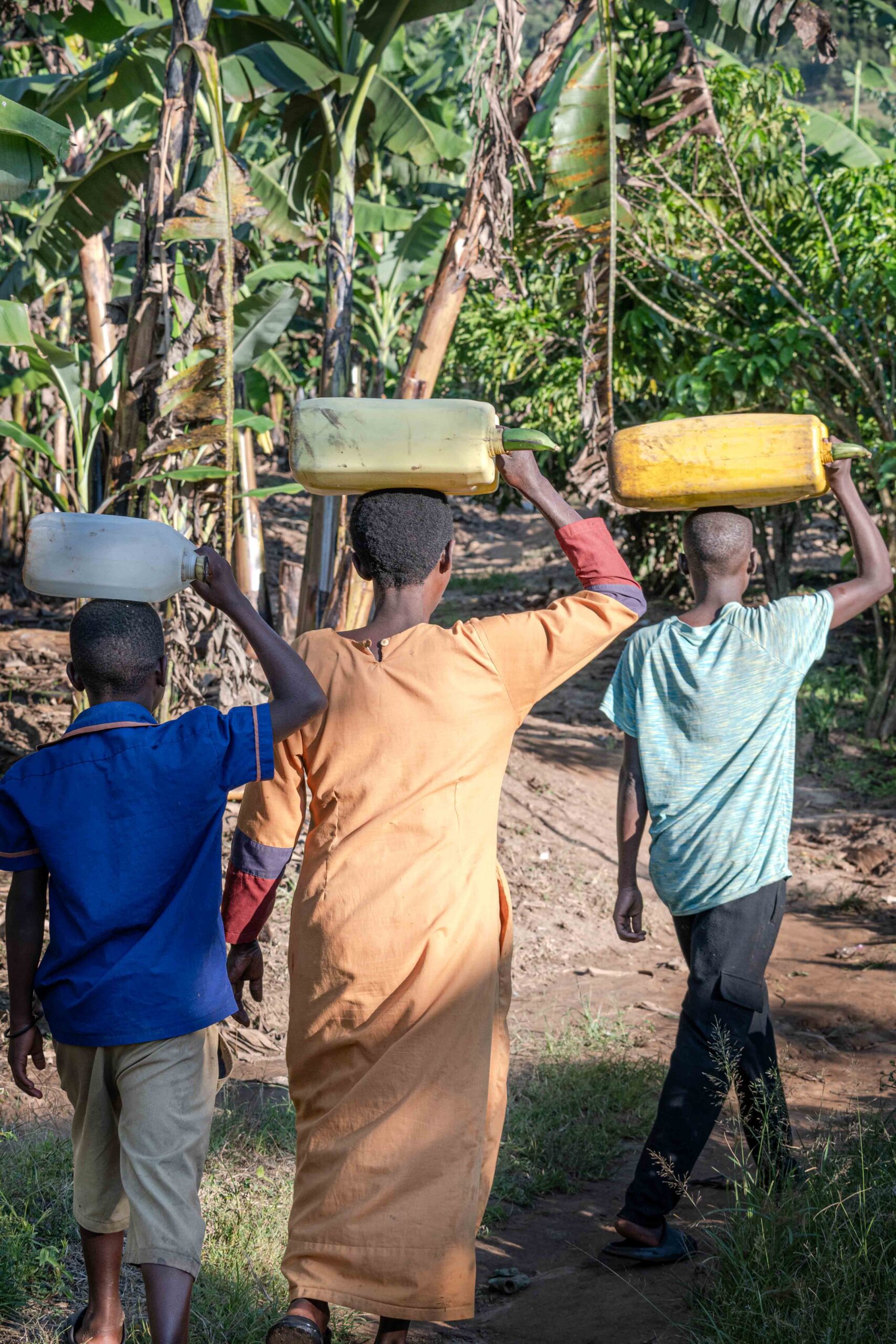

Every morning in Kaparaga’s village in Rwamparara, the same scene unfolds.
Women rise before the rest of the household and head to the water source with jerry cans on their heads, the same journey their mothers and grandmothers made before them. Children follow, some with the full twenty-liter cans, others with smaller containers, all of them doing in 2026 what the children of this village were doing in 1945 when Kaparaga first began to understand the world around him.
Kaparaga watches them go and return after hours, with the yellow cans heavy on young heads and strong shoulders. He sees in them the shape of his mother, the clay pot balanced with the engata ring on her head, the same inequality wearing a different color and a different tool.
“The pot changed to a bucket,” he says. “The bucket changed to a jerry can. The children of this village carry the jerry can. What will their children carry?” He does not know. He hopes it will be nothing because he believes that by then the pipes will finally have arrived to every home in his village.
The testimony of Godfrey Kaparaga Mahuku, aged 88, from Rwampara, western Uganda, was recorded for the Unequal Flow Museum, a digital museum of water inequality in Uganda. His story is part of the museum’s permanent oral history collection. His testimony was recorded in the local language, Runyankole, and can be heard here