
Fredrick Mugira
This collection brings together oral histories from one of Kampala’s informal settlements, the rural hills of Ankole, and the banks of the Nile. Residents, community leaders, elders, and youth share their stories, showing how poor infrastructure, changing markets, and environmental neglect have turned a natural resource into a source of daily inequality. These stories are meant to show the real human impact of water insecurity. For example, in Kampala’s Kifumbira slum, people are choosing between using polluted springs for free and paying for public taps, all while facing floods and high costs. In the rural Ankole region, children spend hours collecting water instead of going to school. Along the Nile, new businesses and dams have closed off shared shorelines, turning what was once free for everyone into something people must pay for. This is forcing some to give up their traditional ways of living.
These oral archives also keep memories and cultural history alive. For example, an 88-year-old elder remembers when people used clay pots enyungu to fetch water before plastic jerrycans became common.
Economics of Clean Water in Kifumbira slum
Location: Kifumbira Slum, Kamwokya, Kampala, Uganda
Speaker: Beatrice Kaija | Yellow Tap Operator and Kifumbira Resident
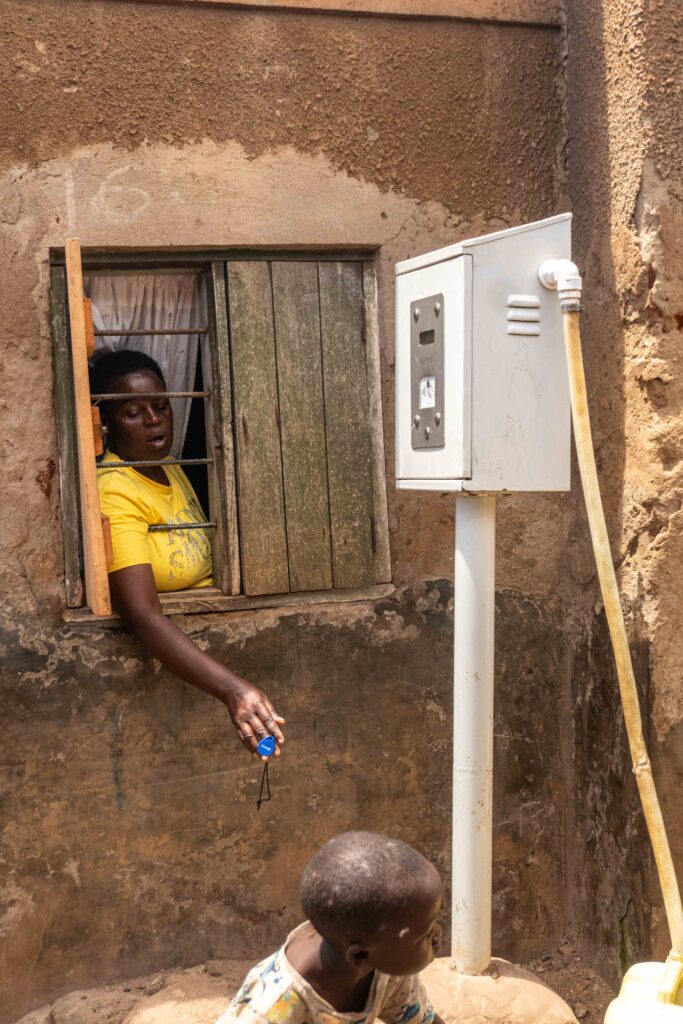

Having lived in Kifumbira for four decades, Beatrice Kaija has witnessed the complete evolution of water access in one of Kampala’s most densely populated informal settlements. Before the introduction of public standpipes, the community relied on a local natural stream. The daily journey to the stream was defined by long queues, congestion, and physical vulnerability. This forced residents, particularly women and young girls, to venture out at night to secure water despite the security risks.
She says that relying on children to fetch water from distant stream points often resulted in long delays as young collectors got distracted along the way. At home, mothers were left waiting for water while meals burned over fires.
Kaija, now operates a public ‘yellow tap’ stand in Kifumbira. She sees both the potential and the stark limitations of urban utility interventions. While the standpipe offers safe, reliable municipal water that restores order to domestic chores, poverty remains a formidable barrier. Kaija observes that many community members continue to draw water from the polluted local spring well, although they are aware that it is contaminated. She attributes this to the lack of the money to buy water from her tap.
Audio Highlight and Pull Quotes
“Sometimes there would be a queue of people at the stream waiting to fetch water, and yet other times they go at night, which is risky.”
Beatrice Kaija
“Many people know the spring well is dirty, but they continue depending on it because they have no money to buy water from the tap.”
Beatrice Kaija
Neglected Catchments and Stolen Hours
Location: Kibona 1 Cell, Isingiro District, Western Uganda
Speaker: Mwesigye Helen | Women Council Chairperson, Kibona 1 Cell
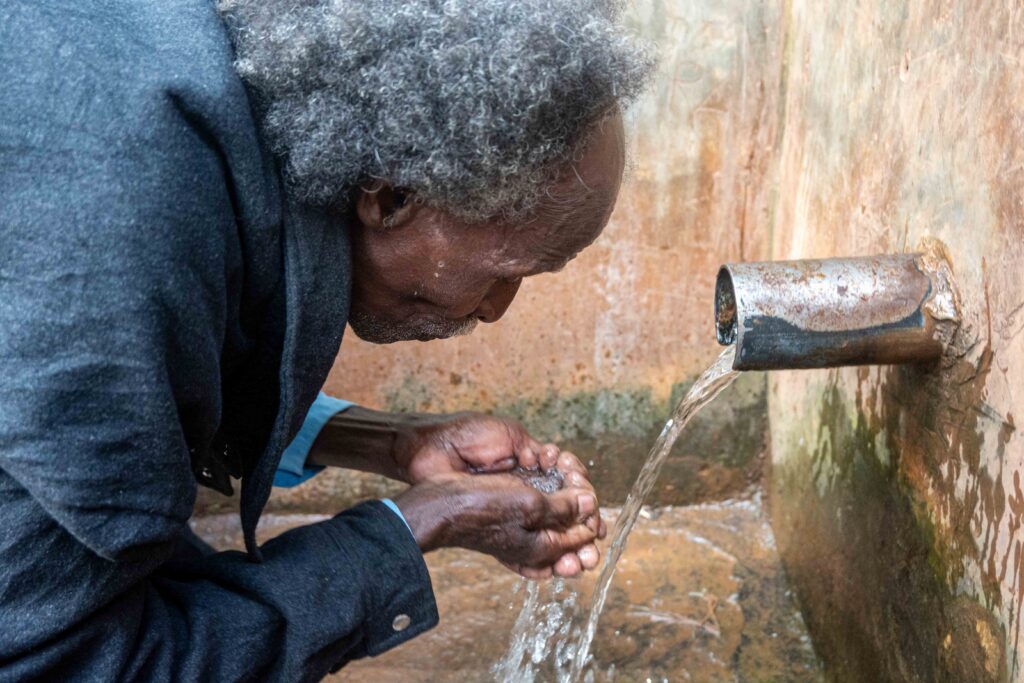
In Kibona 1 Cell, located in the hilly Isingiro district, water scarcity is as much a failure of local environmental governance as it is a natural challenge. Mwesigye Helen, the local Women Council Chairperson, narrates that water is technically available within the ecosystem, but community neglect and the failure to protect natural spring inlets cause viable water sources to degrade or dry up. This lack of collective preservation leaves wide stretches of elevated land completely devoid of functional water points.
This environmental degradation creates a severe gendered crisis. For the women and young girls of Isingiro, the lack of protected local inlets makes daily water collection an exhausting, multi-hour ordeal. Young girls regularly miss school to assist their mothers in searching for and carrying water across long distances. This sacrifices their education and future opportunities. For women, the hours lost to water collection strip away time needed for income generation, household chores, and basic physical rest. In Uganda, unmanaged water catchments directly exacerbate gender inequality and rural time poverty.
“We would be having water, but people don’t care about preserving it. If the water inlets were protected well, water would not be a problem.”
— Mwesigye Helen
“This water crisis is a burden to the women and young girls in this community. Girls miss school to help their mothers fetch water, and women lose hours that could be used for other household chores or rest.”
Mwesigye Helen
The Subsidized Tap and the Natural Spring
Location: Kifumbira, Mulago 3 Parish, Kawempe Division, Kampala City, Uganda
Speaker: Musaazi Israel | Local Council 1 (LC1) Chairperson
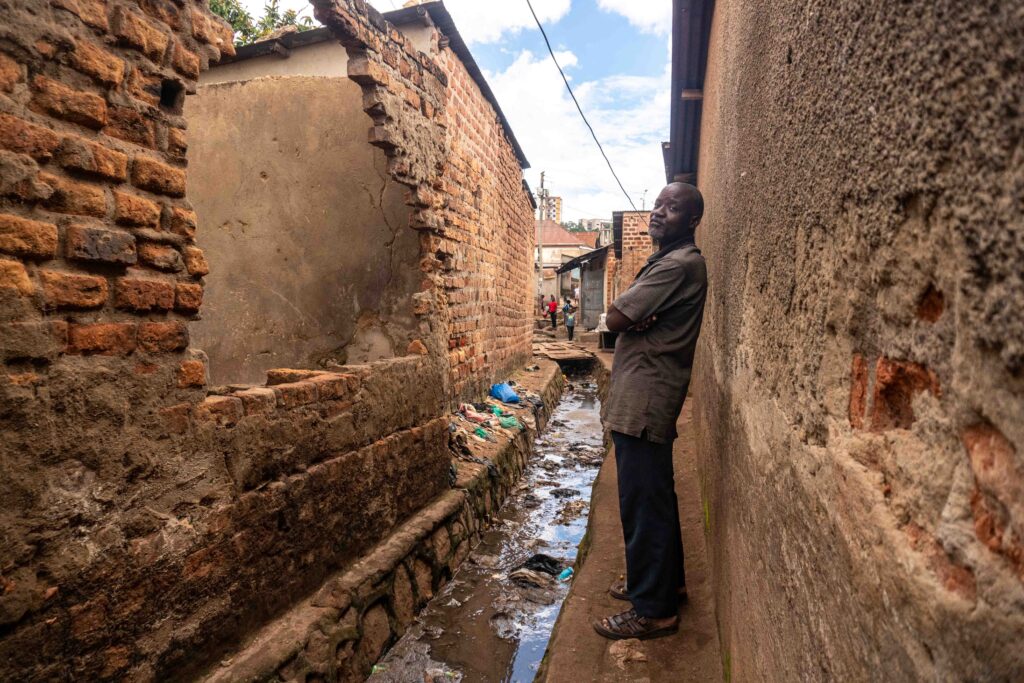
For over half a century, the informal settlement of Kifumbira in Kamwokya, Kampala, has relied on a spring well built in the 1970s. This shared water point served not only local residents but also neighboring communities across Bukoto, Mulago, and Kololo. However, as Kampala city underwent rapid planned and unplanned expansion, human encroachment and informal settlement density degraded the surrounding ecosystem. The unprotected spring, once a lifeline, became contaminated by urban runoff and domestic waste.
To resolve this severe water crisis, public utility interventions were introduced through subsidized ‘yellow taps’ managed by the National Water and Sewerage Corporation (NWSC). Designed specifically for low-income urban informal settlements, this pro-poor tariff structure allows residents to purchase clean, treated water at low cost.
Yet, as village chairperson Musaazi Israel reveals, physical infrastructure and financial subsidies only solve part of the puzzle of water inequality. He says that many residents continue to bypass clean, treated tap water in favor of the spring well. This is driven by suspicions that public chlorination introduces harmful chemicals, alongside the economic pressure to avoid spending even minimal cash on daily utilities.
Audio Highlight and Pull Quotes
“This water stream, which was built in the 70s… later got contaminated due to the encroachment from society. The National Water and Sewerage Corporation has been helpful in providing clean water to the community at a subsidized price, with 500 shillings, one can buy five jerrycans of water.”
Musaazi Israel
“People prefer water from dams and streams to tapped water, which they say … is expensive.”
Musaazi Israel
Rain, Sewage, and Stolen Futures in Kifumbira slum
Audio Track: 05 – Mukasa Moses
Location: Kifumbira Slum, Kamwokya, Kampala, Uganda
Speaker: Mukasa Moses | Community Resident (30 Years)

In Kifumbira, a densely populated slum in Kamwokya, Kampala, the arrival of the rainy season brings an acute public health crisis. The local spring well is at a lower elevation than the surrounding settlement, and during heavy downpours, urban runoff, garbage, and overflowing sewage often wash directly into the community’s primary water source.
According to Mukasa Moses, who has lived in Kifumbira for nearly three decades, the contamination is not accidental; it is driven by systemic infrastructure deficits. Lacking affordable pit-latrine emptying services, some residents release toilet waste into open drainage trenches during heavy rainstorms, relying on the deluge to flush it away. This runoff flows straight into the spring well. This degrades water quality and exposes the entire neighborhood to waterborne illnesses. Subsequently, this water insecurity and urban poverty compound the barriers to education in Kifumbira, leaving half the local children out of school during term time.
Audio Highlight and Pull Quotes
“When the rain comes, people release their toilets in the rain, in the trenches, so all the water comes directly to the spring well. The hygiene in the community is not good…”
Mukasa Moses
“When it’s school time, you may find 50% of these kids are not in school… You may find a 10-year-old kid; she’s a maid. That affects us very much.”
Mukasa Moses
Stolen Hours of Childhood
Location: Rwampara District, Western Uganda
Speaker: Ninsiima Harriet (Age 32) | Nursery School Owner and Educator


For children in rural Uganda, the jerrycan is often as central to the school day as the exercise book. In this personal oral history, 32-year-old nursery school owner Ninsiima Harriet reflects on a childhood photograph taken when she was in Primary five, sitting on the ground with unwashed, dusty legs alongside her peers, holding a jerrycan. Harriet and her siblings deliberately stopped a passing photographer to document their reality, unintentionally creating their own archival record of water scarcity.
Harriet’s story shows how fetching water steals time from young people across Uganda and the Global South in general. Before setting foot in a classroom, some children are forced to complete a morning round of water collection from distant water sources, followed by another after school, and endless hours spent on weekends. While urban students with household water connections or storage tanks spent their evenings studying, rural children traded their homework time for physical survival labor. Today, as a mother of three, Harriet’s acquisition of a domestic rainwater harvesting tank represents more than an infrastructure upgrade. She says it is an intentional act of intergenerational protection designed to safeguard her children’s right to an education.
Audio Highlight and Pull Quotes
“We never had time to read books. Instead of reading books, we were always fetching water. And those in towns, they have tanks, water is always available. But us in the village, we were always there fetching water.”
Ninsiima Harriet
“Now I want life to be easy, because I don’t want what I faced, my children to face it… So, when I got married, I bought a tank.”
Ninsiima Harriet
Submerged Rapids, Divided Waters
Location: Bujagali Village, River Nile, Uganda
Speaker: Benjamin Mukisa (Age 23) | Safety Kayaker and River Guide
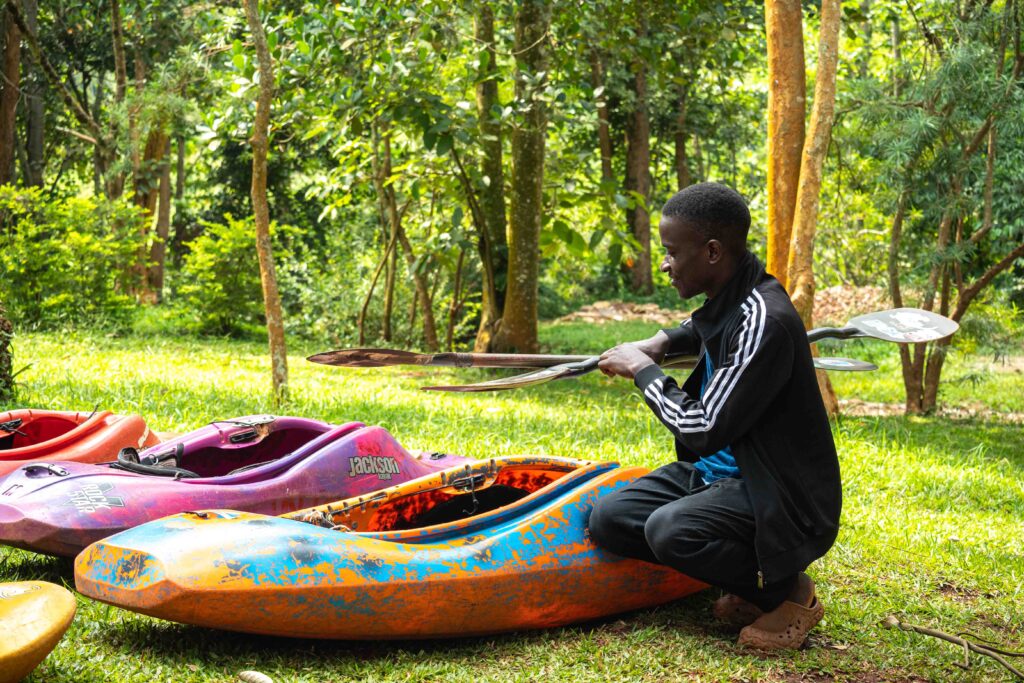
Bujagali Village in Jinja takes its name from the legendary spiritual guardian who once sat above the roaring white water of the Victoria Nile. For generations, the rapids were both a sacred landmark and an international tourism draw. The construction of the Bujagali Hydropower Dam forever changed that landscape. It flooded the falls and submerged the waters beneath a still reservoir.
In this oral history, 23-year-old safety kayaker Benjamin Mukisa captures what was lost when the water level rose, and reveals how the Nile today operates under a stark economic divide. For capital-backed adventure companies, the altered river remains a lucrative playground for commercial rafting and sports. But for the surrounding community, the Nile remains a raw utility where residents bathe, wash clothes, and carry jerry cans on foot for kilometers to meet their basic domestic needs.
Audio Highlight and Quote
“Before we had Bujagali Dam, everyone used to benefit from the river because we had a big number of people who used to come just to see the falls… The rich people who have capital, they make business on the river, like opening up companies. But the poor people who don’t have capital to do anything on the river, they use this river for washing, for bathing, or carry water like for 1 kilometer.”
Benjamin Mukisa
Privatization, Enclosure of the River Nile, and Displaced Livelihoods
Location: Jinja, Uganda, along the River Nile
Speaker: Zahuma Nakabugo | Community Elder and Nile Riparian Resident
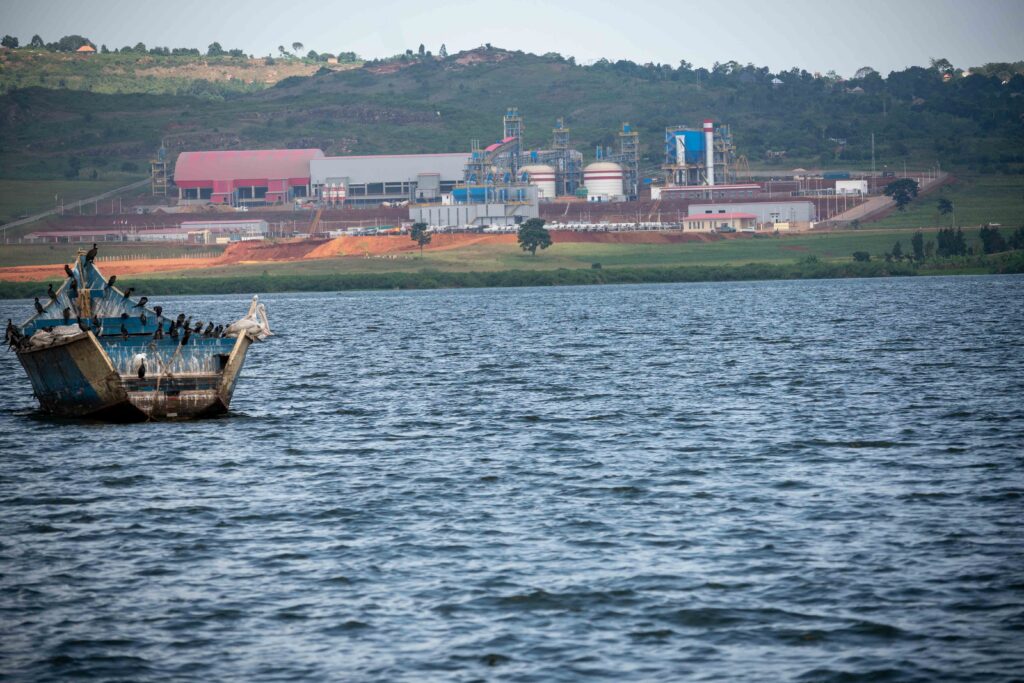
For generations, riparian communities along the River Nile relied on the river as a shared, open-access commons. Community elder Zawuma Nakabugo recalls a time when families freely gathered along the shoreline to fetch clean drinking water, wash household clothes during weekends, and source affordable fresh fish. She reports that residents bathed along the riverbanks rather than in open water to preserve the river’s quality for downstream neighbors’ use.
However, according to Zawuma, this centuries-old reliance on the Nile was disrupted by the rapid expansion of commercial aquaculture and private investment along the riverbanks. As commercial investors secured concessions for large-scale tourism enterprises, hotel developments, fish farming, and damming projects, public shoreline access was restricted and fenced off. Local residents were systematically barred from reaching parts of the river edge, making water collection, in Zawuma’s words, “as hard as milking a bull.”
The enclosure of the parts of the Nile has forced communities that once drew water freely to purchase piped tap water at commercial rates. Zawuma says they now pay 100 Ugandan Shillings for a 10-liter jerrycan and 200 Shillings for a 20-liter jerrycan. For elderly residents who have outlived their prime working years and lack a steady income, losing free access to river water and low-cost fish represents a severe financial strain and social displacement, according to Zawuma.
“As commercial investors and developers secured concessions for large-scale projects… public shoreline access was restricted and fenced off”
Zahuma Nakabugo
“We used to fetch water from the Nile for free, and on weekends, wash our clothes and get fish. But currently things are not good… “
Zahuma Nakabugo
Material History and Infrastructure Shifts
Location: Itojo, Ntungamo District, Western Uganda
Speaker: Kaparaga Mahuku | 88-Year-Old Elder and Local Historian
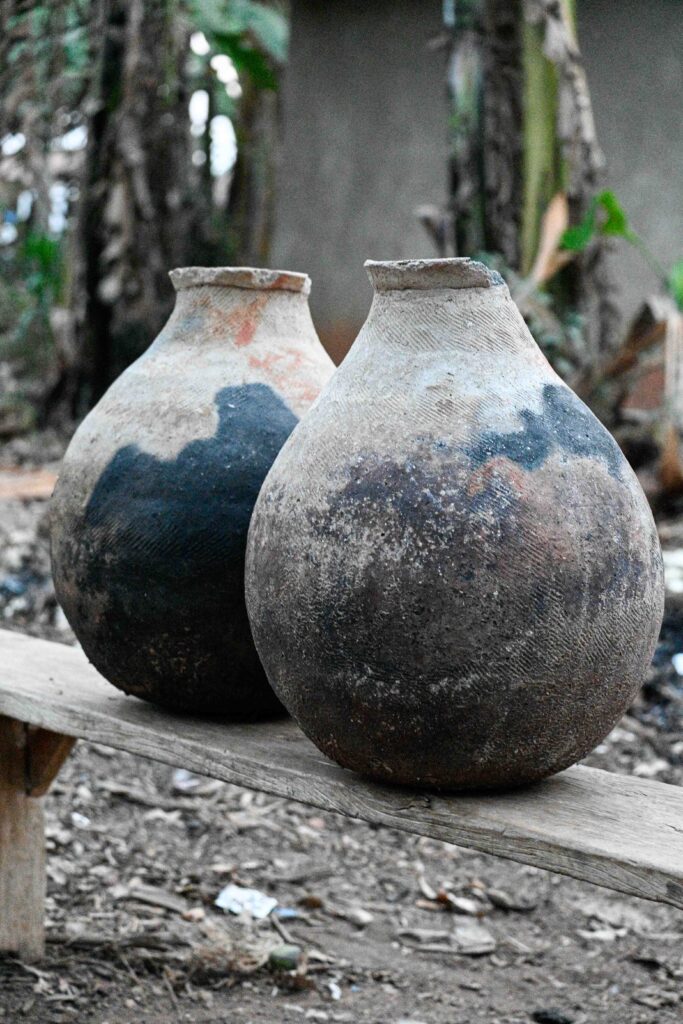

Godfrey Kaparaga Mahuku is 88 years old. He has lived in western Uganda his entire life. His memory stretches back to a time when plastic did not exist, and every drop of water was carried in something made by hand.
He remembers when women fetched water in clay pots called enyungu and dried calabashes called ebisisi, which were balanced on heads using woven banana-leaf rings called engata to cushion the weight.
Later, the tin bucket arrived not as a water container but as a kerosene tin, imported for paraffin lighting. Families adopted it for water, but first they had to scrub out the toxic fuel residue thoroughly before it was safe to use. It was not designed for water. It was what was available.
The Jerry can came next. Kaparaga first saw one around 1972. Like the kerosene tin before it, the jerry can was originally a fuel container repurposed for water. It was lighter, more durable, and easier to carry than the tin bucket. Within a few years, it had become the standard water container across the region and across much of Africa.
Kaparaga also remembers the water sources themselves changing. Village streams gave way to early engineering projects, including a spring well in 1954, which excited communities by storing far more water than any stream and delivering it with greater clarity. The spring wells were followed by boreholes, which were one of the first steps toward the municipal piped systems that exist today.
Audio Highlight and Pull Quotes
“Jerrycans came recently in the late 70s—I first saw a jerrycan around 1972. Before that, we used clay pots carried on heads using banana leaf rings, making small support holes at the riverbank to hold the pots…”
Kaparaga Mahuku
“I saw the first spring well in 1954 in Itojo, Ntungamo… this innovation excited residents because the water was clean and had high volume.”
Water Well as a Sanctuary of Female Solidarity
Location: Nyamirembe, Bushenyi District, Western Uganda
Speaker: Asiimwe Emmanuel | 70-Year-Old Community Opinion Leader
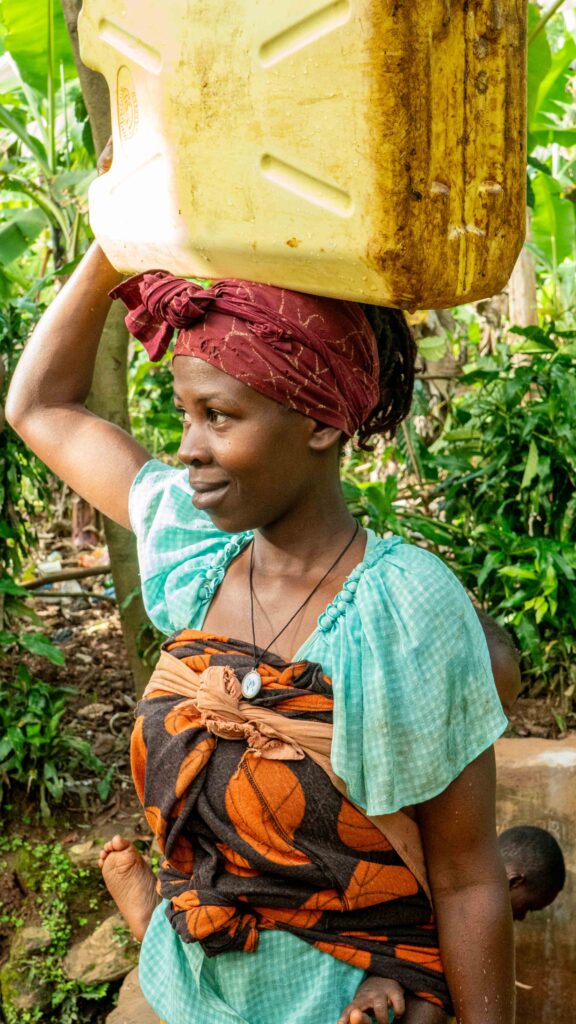
Asiimwe Emmanuel has lived in the Ankole region for over seven decades. He has watched the land, the water, and the people change, and his memory holds unwritten history that no government report captures.
He describes a sharp divide that has always existed in the region. Districts like Bushenyi, rich in wetlands, rarely ran short of water. But in the cattle corridor zones of Kashari, Nyabushozi, and Isingiro, drought was a way of life. He says people there have a saying that instead of asking for water, you had better ask for milk.
In traditional Ankole society, water collection was women’s work. Men cleared land, hunted, and built homes. Women walked to the well. Asiimwe reveals that the walk to the well was not simply a burden for many women but also a source of freedom.
He says that the well was one of the few places women could go without oversight or explanation. They gathered there daily, talked openly, shared problems, gave advice, and built the kind of trust and solidarity that sustained families and communities. Staying long at the well was understood and accepted. Nobody questioned it. The well was, in its own way, a sanctuary.
According to Asiimwe, when the well disappears, so do the gathering places for women. He believes that the tap delivers water to the door, but only in isolation. He says the daily walk, the shared road, the conversations at the water’s edge, all of that goes when piped water is extended to homes in a village.
“In Kashari, there was a saying that instead of asking for water, you had better ask for milk because there was no water.”
Asiimwe Emmanuel
“Fetching water was very important in the past because it used to act as a social gathering for women, especially to discuss their family affairs and help each other… and no one would blame them for delaying at the wells.”
Asiimwe Emmanuel