
Uganda is home to Africa’s largest tropical lake and the source of the world’s longest river. Yet, for millions of citizens, access to safe water is limited not by nature, but by infrastructure, history, and price.
Fredrick Mugira
The Jerry Can as Missing Infrastructure
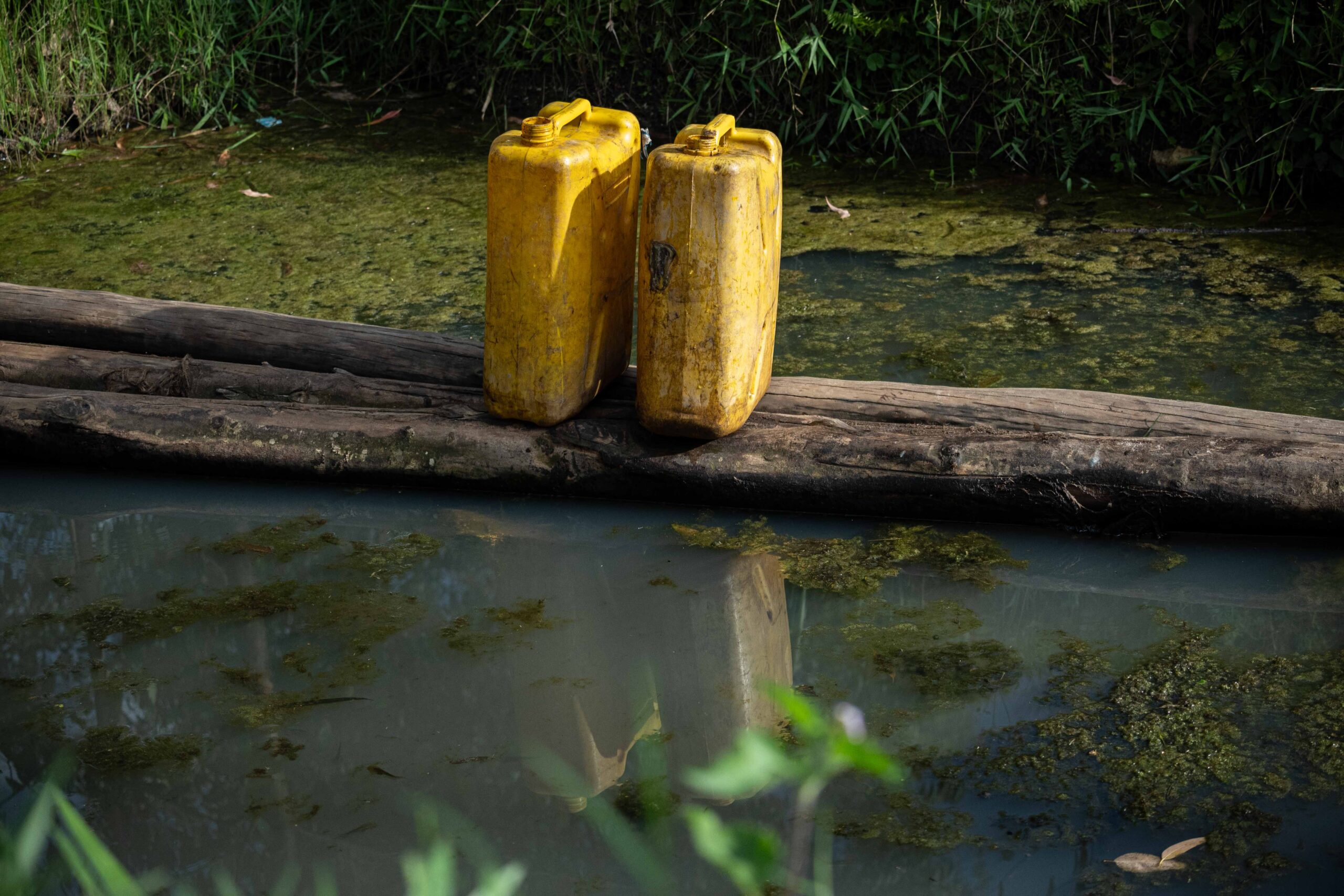


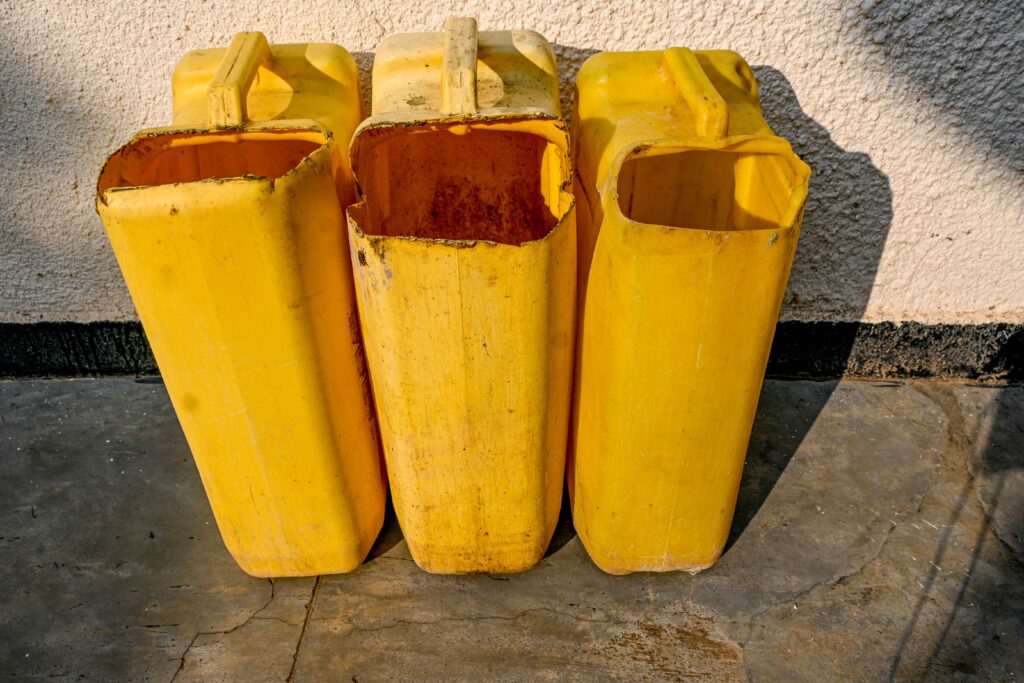

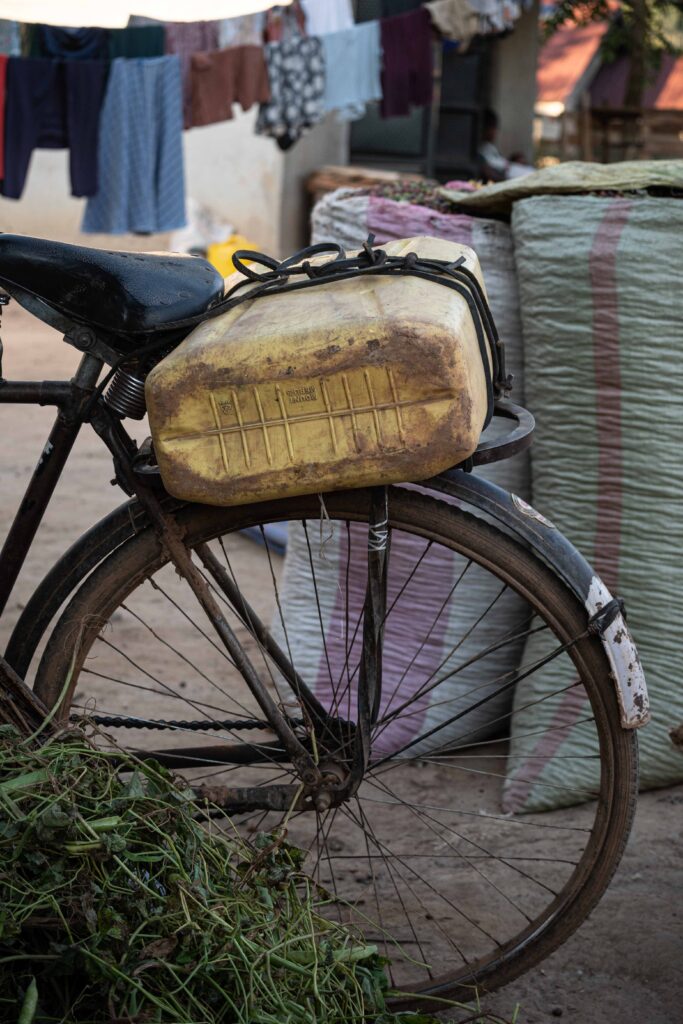

It is plastic. It weighs nothing when empty and everything when full.
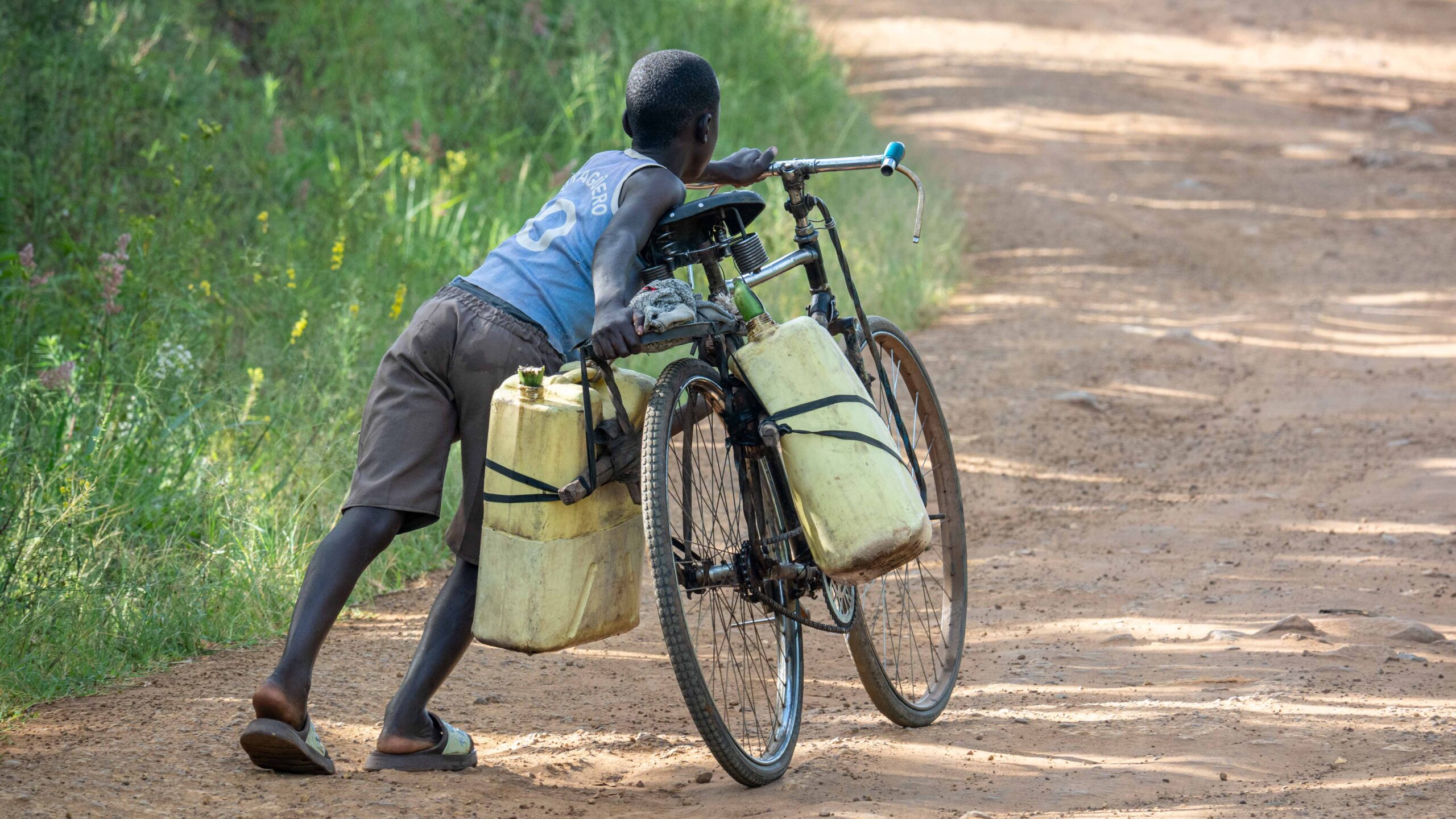
Some are yellow. Some were once white but have turned grey with age and use, stained by the rivers, springs, and taps they have visited hundreds of times. Whatever their colour, you will find them everywhere in Africa and in particular, Uganda, on the heads of women walking to springs before dawn, strapped to the back of boda boda motorcycles navigating city streets, in the hands of children who should be in school. They are outside homes in fishing villages, on boats on major rivers, in urban slums, and in rural communities alike. They are so common that, to many, they have become an invisible part of the surroundings and routine.
Even in Entebbe, one of Uganda’s most developed urban centers, sitting on the shores of Lake Victoria itself, people walk past with jerry cans. Dr. Maha Abdelrahim Ismail, a groundwater expert and UNDP/GEF Project Team Leader at the Nile Basin Initiative in Entebbe, notices this every time.
“I see that people are moving with their yellow jerry cans all the time, even here in Entebbe,” discloses Dr. Maha, further stressing that, “there is inequity in accessing water because water reaches some houses while other houses are deprived, whereas the resource is one, which is Lake Victoria.”
Same lake. Same water. Different lives.
Dr. Maha identifies something that most water statistics miss. In the water sector, she explains, there are two types of scarcity. The first is “physical scarcity,” where there is simply no water. The second, and far more common in Uganda, is “economic scarcity,” where water exists in abundance but the infrastructure to access it does not.
“If you have physical availability of water but you don’t have the right infrastructure to access it and utilise it, that puts you at an unequal level with those who have the right infrastructure to the same water resource,” she says.
The lack of physical infrastructure for water often correlates with a lack of epistemic infrastructure, the information and education needed for communities to advocate for their right to water. You cannot demand what you do not know you are owed.
Uganda is not a water-scarce country. It has Lake Victoria, the world’s largest tropical lake. It has the Nile, the world’s longest river. It has Lake Edward, Lake George, Lake Kyoga, and transboundary underground aquifers such as the Kagera Aquifer, shared by Rwanda, Tanzania, and Uganda, and the Mt Elgon Aquifer, shared by Kenya and Uganda. The country is not running out of water. What it is running out of is the investment to build the infrastructure that turns a water resource into a water source.
According to Dr. Maha, a resource is raw water, a lake, a river, an aquifer underground, and a source is what actually reaches people’s homes, such as a tap and a tank. What stands between them, the treatment plant, the pipes, the transmission lines, is infrastructure. And that is exactly what is missing.
“Between the resource and the source, there is the infrastructure that brings the water from the resource to the source,” she says. According to Dr. Maha, the source has to be “modified so as to enable the basic human right to water access.”
An unmodified source, raw water drawn directly from a lake, a river, or a swamp, does not meet that standard. It is free. But it is not safe! And across Uganda, millions of people have no choice but to use it.
According to the Sphere Standards — the global benchmarks for humanitarian water access — every person should have a safe water source within 500 meters of their home. The total time spent queuing at the water source should not exceed 30 minutes. At the recommended flow rate, filling a 20-liter jerry can should take less than three minutes.
Three minutes to fill a twenty-liter jerry can. That is the global standard. In much of Uganda, the same task takes hours. The walk. The queue. The home return with a jerry can full of water. That gap between what should be and what is, is where the water inequality lives.
“We have not established a proper infrastructure that delivers water to each and every one of us,” Dr. Maha says, further citing an example of Kampala, “where some people are still using wells and sometimes just go to the marshes to fetch water.”
Professor Ephraim Kamuntu frames the same problem from a policy and economic perspective. An economist and former Minister of Water and Environment, now Uganda’s Minister of Internal Affairs, Professor Kamuntu has spent decades at the intersection of water governance and national development. He knows where the water inequality begins.
“Even the natural water resource base (such as lakes and rivers), if you have a map of Uganda and you see where the lakes are and where the rivers are, you will see that they are not evenly distributed across the country,” he says. According to him, “that is the first inequality.”
Uganda is water-rich, but unevenly so. In the Karamoja region, for example, there are no major lakes or rivers, nothing reliable. The infrastructure built to bridge that gap has instead followed the same unequal pattern. Piped water, gravity water systems, boreholes, and shallow wells are all, in Prof. Kamuntu’s words, “similarly not evenly distributed across the region.”
Paying Eleven Times More Outside the Pipe Network
About 81 percent of Uganda’s population has access to an improved water source. But only 19 percent has piped water. The gap between those two numbers, 62 percentage points, is where the jerry can lives. The water is there. What is missing is not the resource. What is missing is the infrastructure that turns the resource into a right.
Where that infrastructure exists in connected households, mostly in urban centers and peri-urban areas such as Mbarara, Jinja, and Kampala, they pay a regulated tariff of 4,331 Ugandan shillings per cubic meter (1,000 liters) through the National Water and Sewerage Corporation. The urban poor, by contrast, buy water from vendors at 500 to 1,000 shillings per 20-liter jerry can. That is about 50,000 shillings per cubic meter, which is roughly 11.5 times what the wealthiest residents pay for the exact same water.
The poorest Ugandans pay 11.5 times more for water than the richest. Not because they use more. Not because their water is better or safer. But because the pipe has not reached them, the market has stepped in at a price the poor can barely afford.
Prof. Kamuntu connects this directly to the poverty trap that water inequality creates and sustains. “Those who are more resourced, who have more income, will definitely have water,” he says. “Those who have less income will have to debate between food and water, and school fees and health. Finally, the option is travelling more than a kilometer to reach the source of water instead of having water flowing to your house.”
For the household without a connection, the jerry can is not a choice. It is the missing infrastructure. Every time someone lifts a full jerry can onto their head, they are performing a service that pipes and taps should be delivering. They are walking the distance pipelines should cover. They are doing the work that infrastructure should be doing for them.
The jerry can represents time stolen, mostly from women and girls in sub-Saharan Africa, who bear the primary responsibility for fetching water in nearly 80 percent of households without direct access to water. In some countries, the burden is even heavier. For example, women shoulder that responsibility in 90 percent of rural households in South Sudan and in 84 percent of rural households in both Mozambique and Malawi.
It represents a health cost. When safe, modified water is out of reach, people drink what is available, which is most likely unmodified, untreated, and unsafe. The diseases that follow are not accidents. They are the predictable consequences of an infrastructure gap that has never been closed.
It represents an education cost. Children sent to fetch water before school, arrive late or not at all. Girls kept at home to manage water collection fall behind or never catch up.
And it represents an economic trap, according to Prof. Kamuntu. “One of the reasons why people are trapped in poverty is because their women and children are simply fetchers of water and firewood,” he says. “If you can liberate your women by extending water to their doorstep, you will have moved them out of poverty with a stroke of a pen,” contends Prof. Kamuntu.
Jinja: At the Source of the Nile, the Poor Still Go Without Safe Water

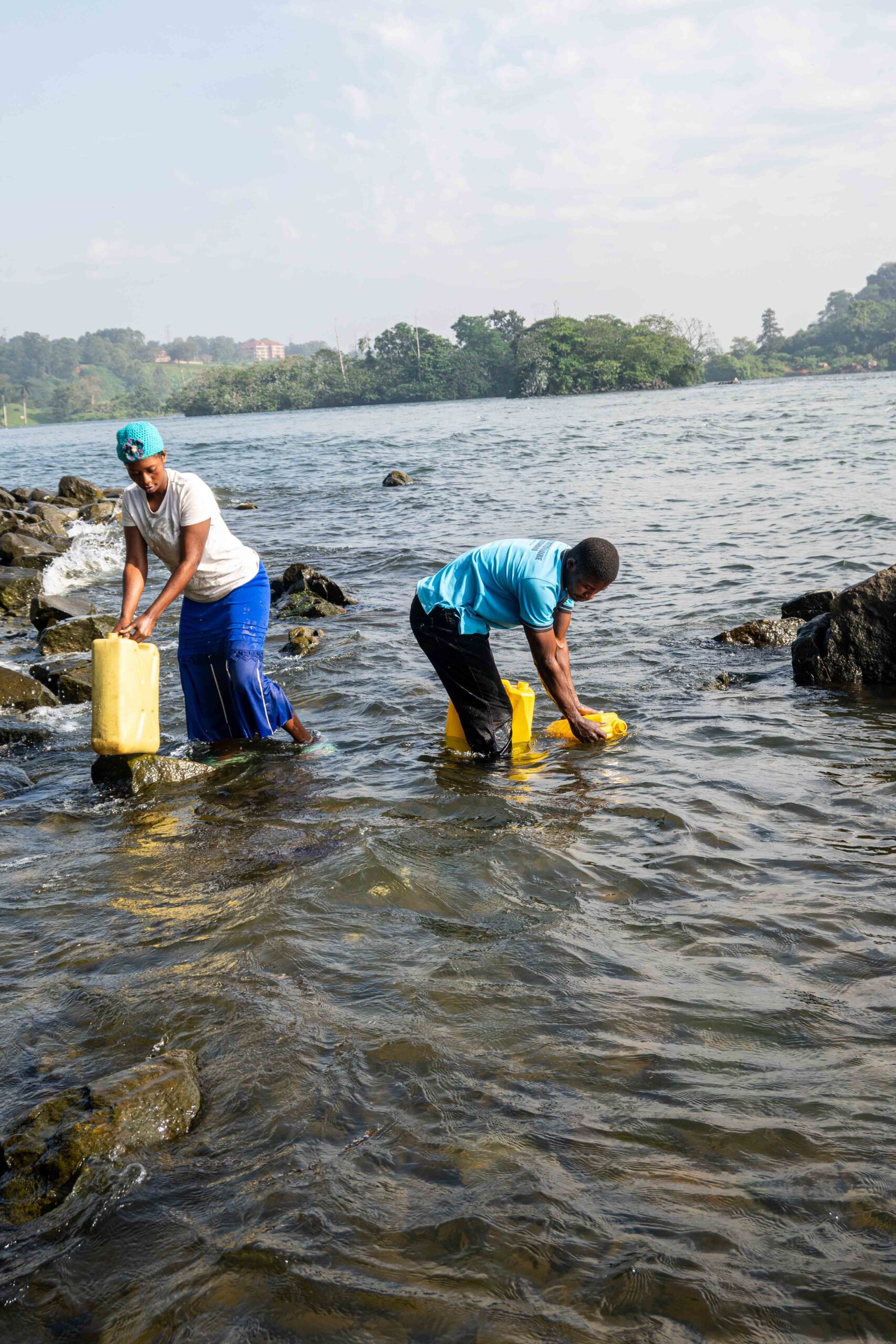


At the edge of Jinja city, where Lake Victoria flows into the world’s longest river, the water looks wide and endless. People travel from all over the world to visit this spot, take photos, and admire the place where the Nile begins.
At Bujagali, just upriver, Claude Muhire knows the Nile differently, not as a wonder, but as a risk he takes every day.
Muhire is 30 years old. He lives near the riverbank. He has watched the Nile for five years, ever since he migrated from Kasese district in south western Uganda to find a job in an urban center. Every day, he walks down to the Nile with a jerry can and sometimes with his wife and their child.
“We use this Nile water,” he says. “It is not good, but we use it because we have no tap water.”
For Muhire, paying for water from National Water and Sewerage Corporation taps is not an option. He has no money for that. “Being at the Nile does not mean we have water in our homes,” he says. “We come here to fetch it because it is free. But it is not safe,” further narrates Muhire.
His wife, Esther, 25, was also at the riverbank filling her jerry can from the same water when we met. They have one child.
“In this water, there is a lot of dirt,” Esther says. “But we have no option,” she notes.
In Dr. Maha’s terms, what Muhire and his wife, Esther, are drinking is an unmodified source, raw water drawn directly from the river, with no treatment, no chlorination, no transmission line to make it safe. The water exists. What does not exist is the infrastructure, the income, and the political will to make it safe for the poor.
Isingiro: The Hill Before the Water



About 350 kilometers southwest of Jinja, the water does not come to Atuhaire Sylivia, a housewife. She goes to it.
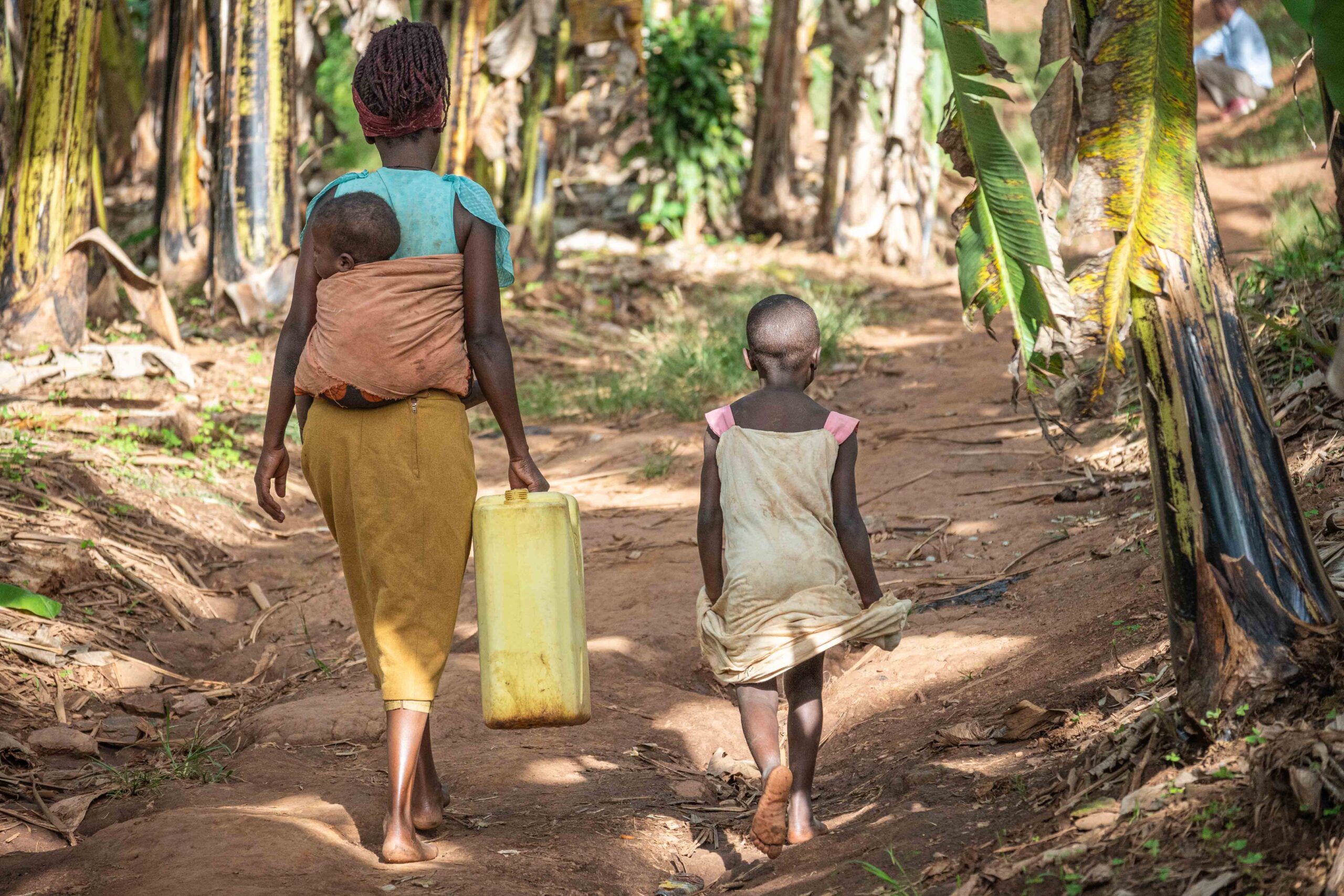
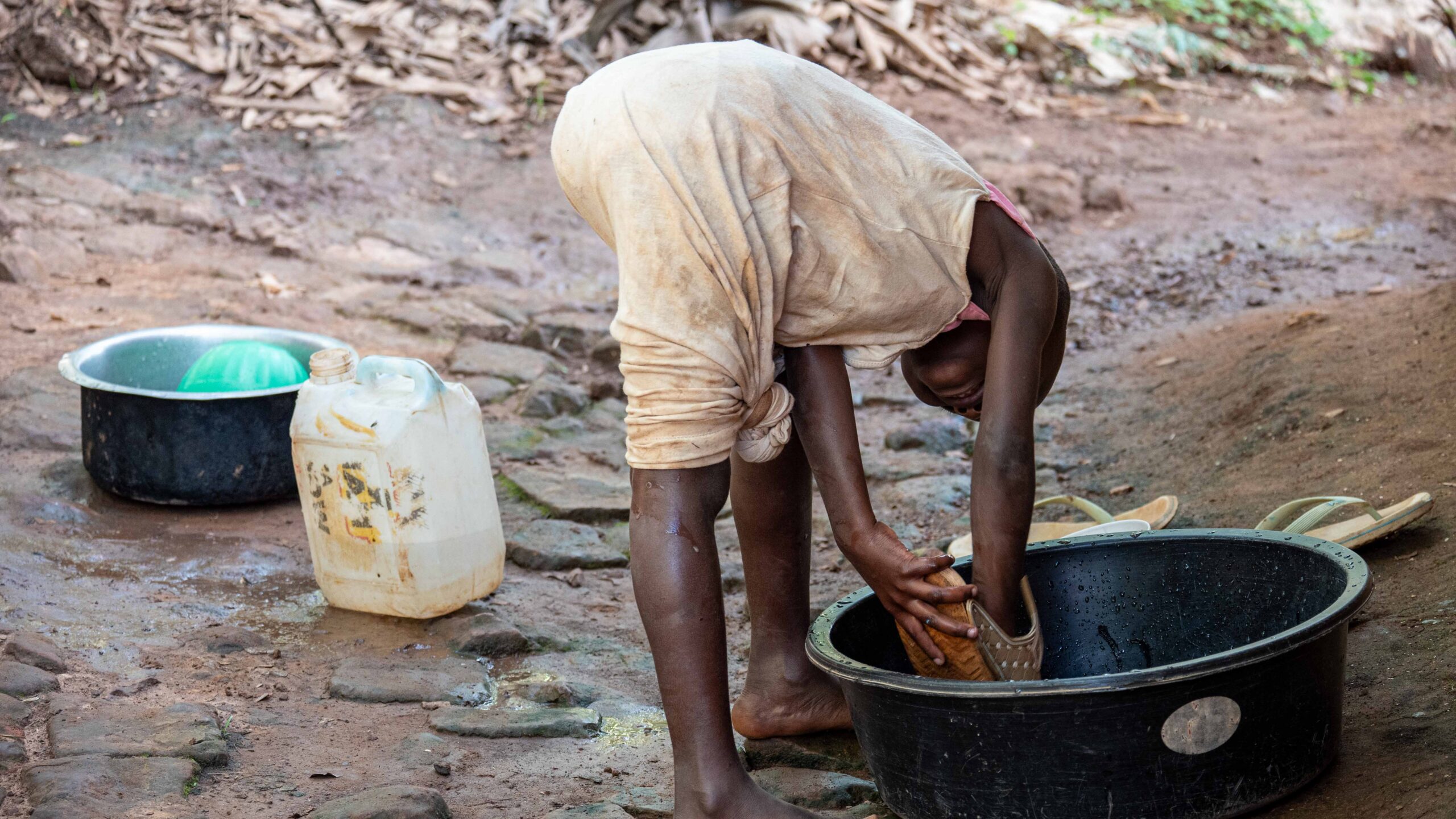
Every morning, before her child leaves for school, Atuhaire sends her out with a five-liter jerry can. The spring is not far, but the hill between their home and the water is steep, and the jerry cans are heavy. By the time the child delivers the water and sets off for class, she is sometimes already late.
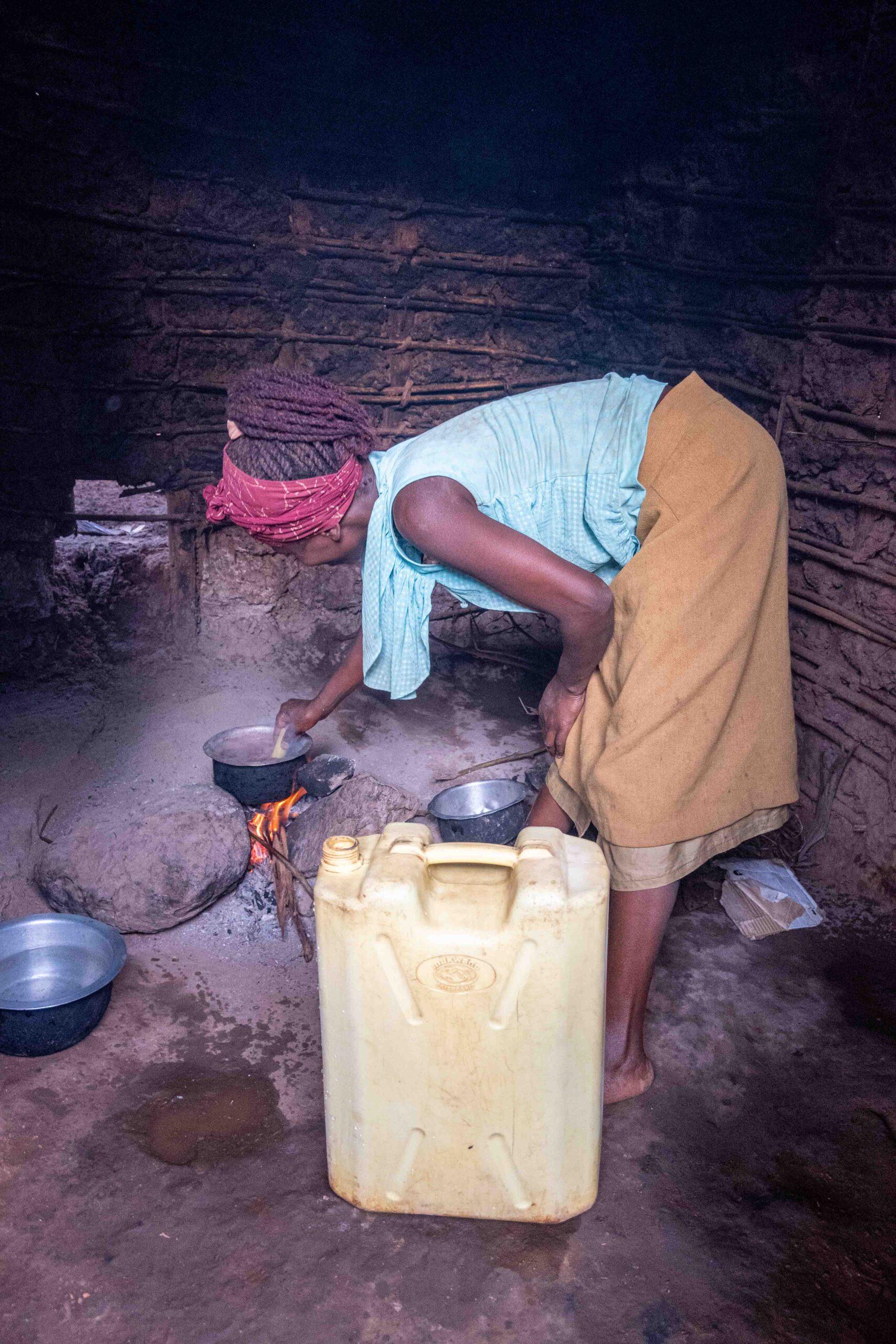
Atuhaire is aged 30. She lives in Rugarama cell, Birere, in Isingiro district. She fetches water from a spring. She carries it home, uses it to cook, to clean and, to keep her family alive.
“For us, you have to first climb a hill, then slope back down with a 20-liter jerry can on your head,” recounts Atuhaire. This physical burden is compounded by the pressures of poverty; as she further narrates, “when you are looking for money and busy, you may not remember or get time to boil the water.” So, they drink it unboiled. And they get sick.
It is a poverty trap centered on water, which Prof. Kamuntu cautions about. The time spent fetching water cannot be spent earning income. Unearned income cannot pay for safer water. The unsafe water causes illness. The illness costs money. The money spent on treatment cannot be saved.
Kifumbira: Safe Water Exists. Nobody Can Afford It.
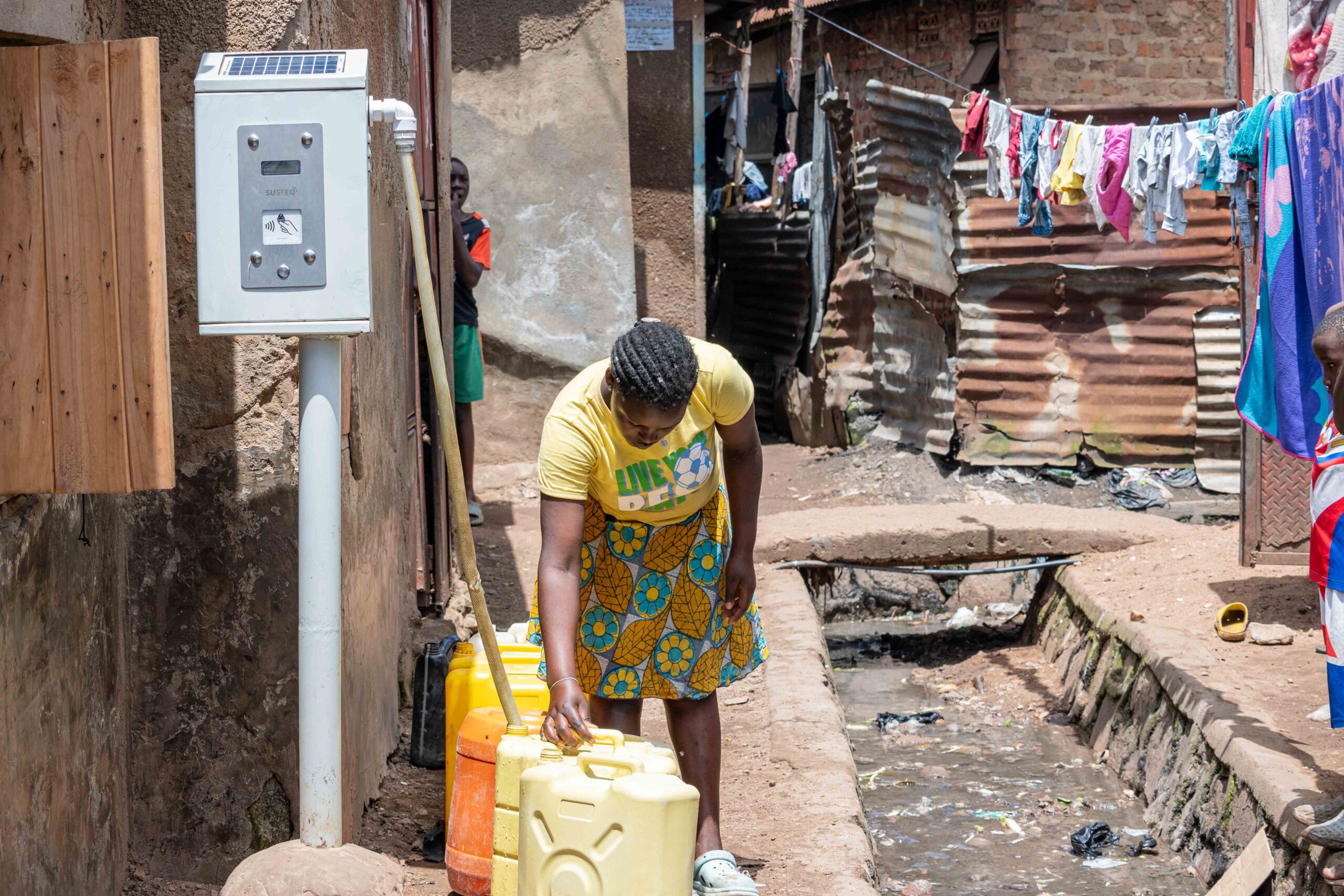
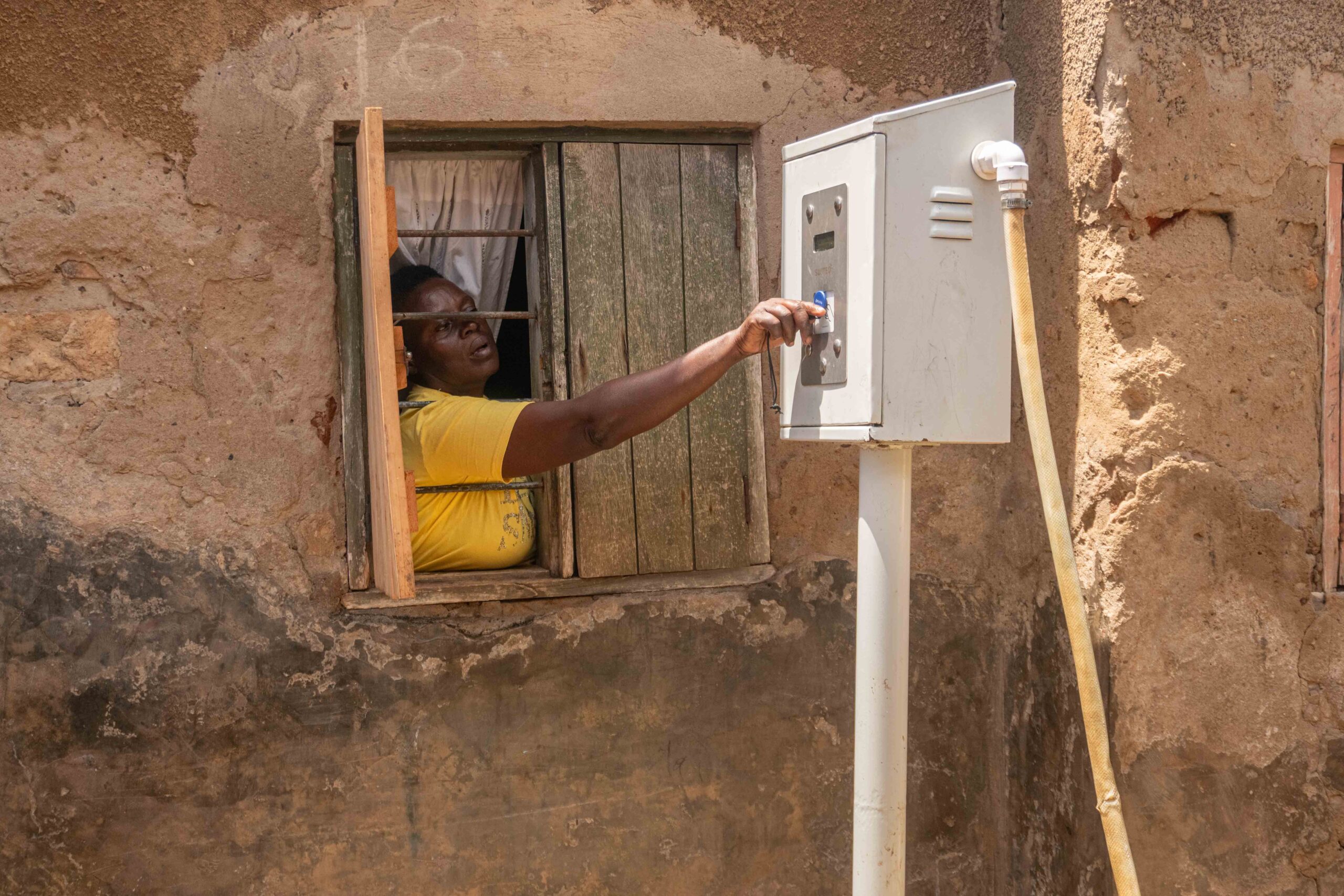

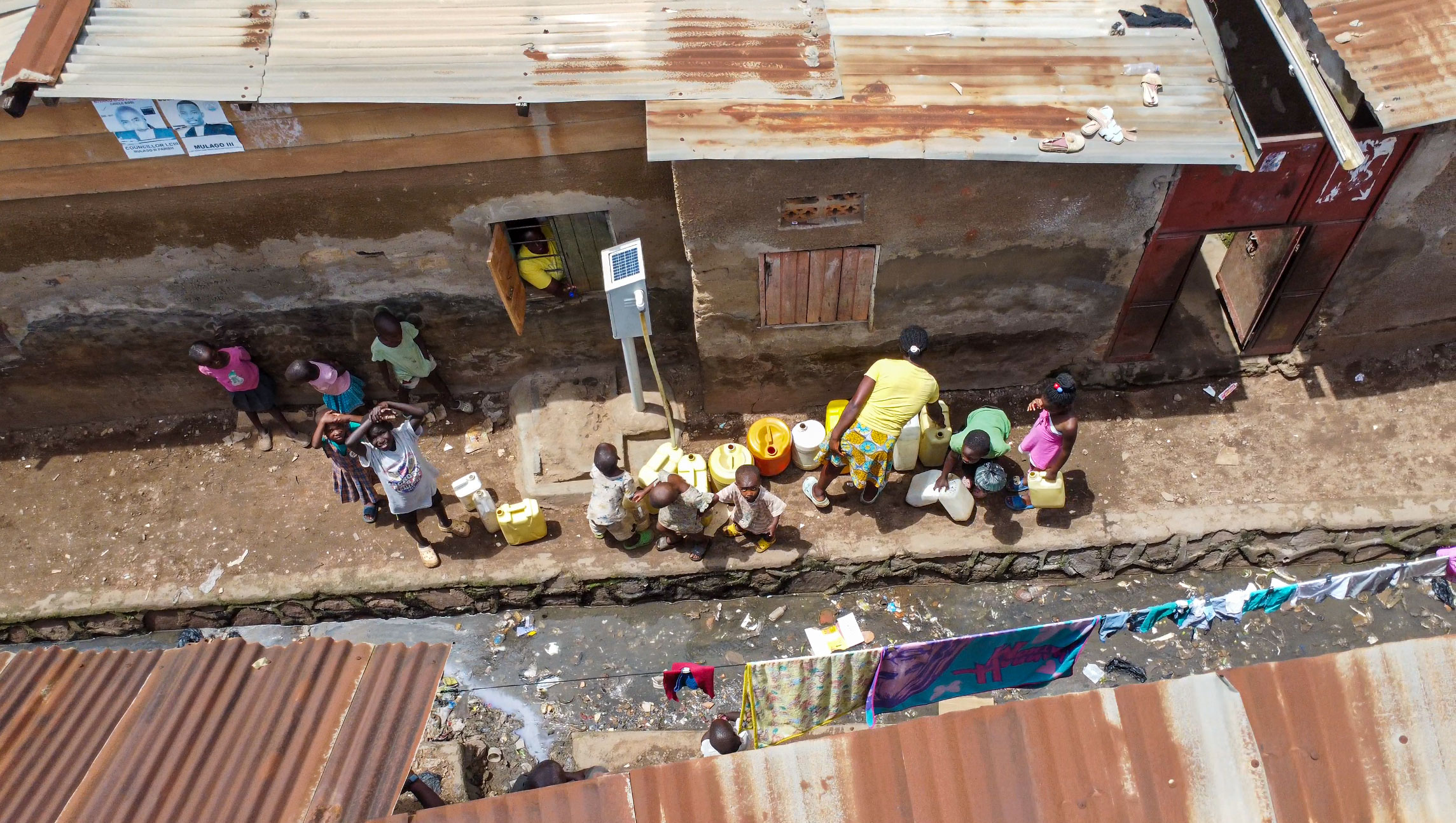
In Kifumbira, Kamwokya, one of Kampala’s densest urban slums, Beatrice Kaija sells water for a living. Frequently, she watches her own neighbors choose a free, contaminated spring over her taps, because they cannot afford even a small price for something safer.
Kaija is a water vendor. She has lived in this slum for forty years. Before the piped water arrived, residents fetched from springs, and for many of her customers, that has never really changed.
“Before this tap water came, we used to fetch water from springs,” she narrates. “People have no money to buy this piped water. One day they come to buy, another day they don’t. They fetch from springs,” notes Kaija.
At 100 shillings a jerrycan — a government-subsidized price, already reduced to meet what poor households can pay, even that small cost is more than what many of her neighbours can afford. “They can’t buy water for 100 shillings a jerrycan when spring water is free,” she says.
Faced with a modified source that costs money and an unmodified one that costs nothing, households with no income choose the free option, whatever the risk. The spring Kaija’s customers fall back on is never treated. It is exactly the kind of unmodified source Dr. Maha warns is insufficient for human consumption.
What the free option costs them is time and safety. The queues are long enough, according to Kaija, to turn a simple errand into danger. “We would go there at night and get problems,” narrates Kaija.
The burden falls hardest on children and on the elderly. Kaija is old and frail now and can no longer make the long walk herself, so the task passes to whoever is left at home. “Children we send there go and play, and we never get water at the right time,” she says. The burden grows heavier when children are sent to spend hours standing in the queue instead of sitting in a classroom.
What worries Kaija most is what those long queues are teaching the children sent to stand in them. “On those long queues, children learn bad manners,” she says. She cites examples, including rumor-mongering and petty theft.
In Kaija’s account, the spring is not simply a free water source. It is a contaminated one, made worse every year by a growing population and sewage that has nowhere else to go, especially when it rains and the slum floods. It is also the place where Kifumbira’s children waste hours that children in homes with tap water spend revising their books.
Boma: How Colonial Maps Still Divide Access Today
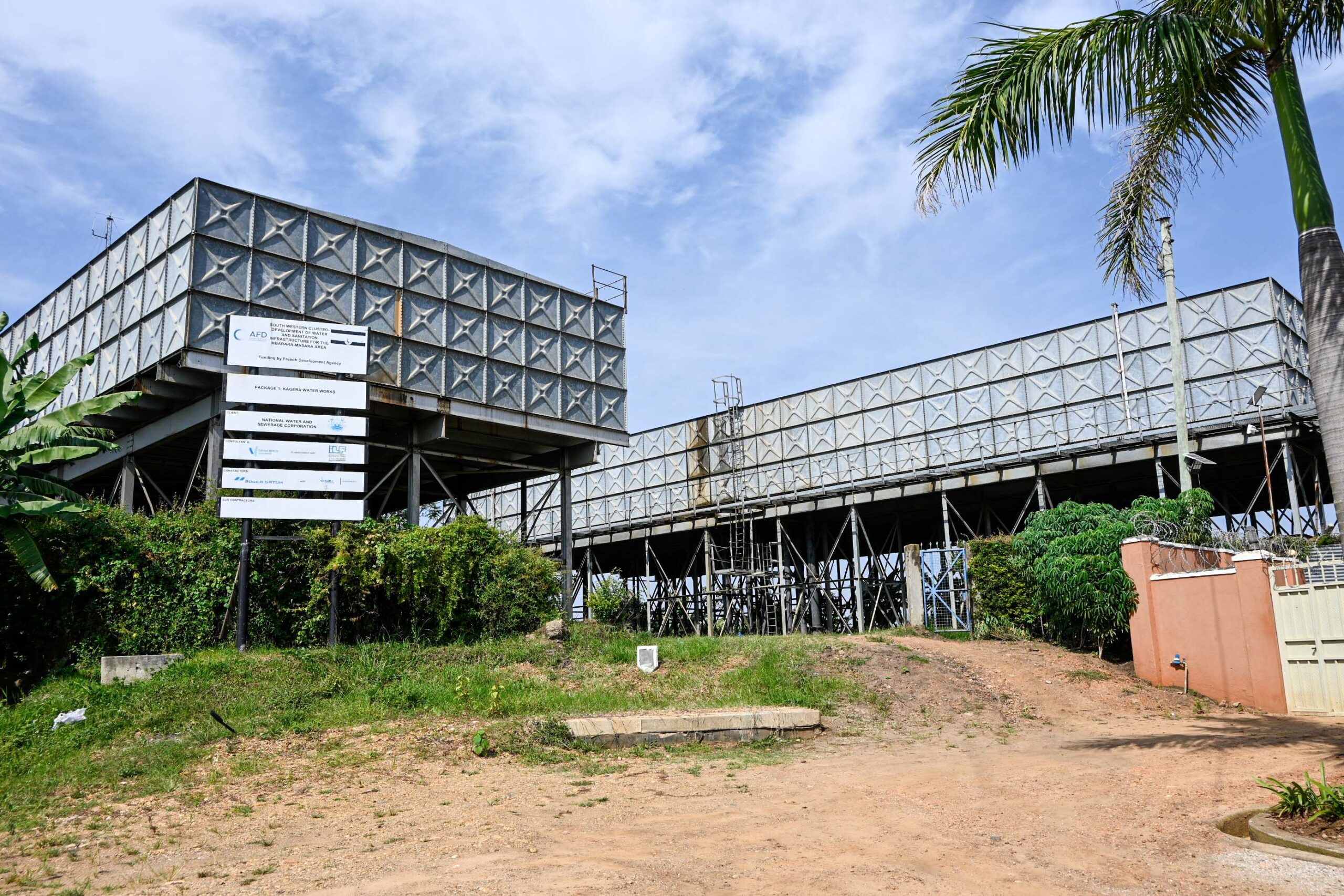
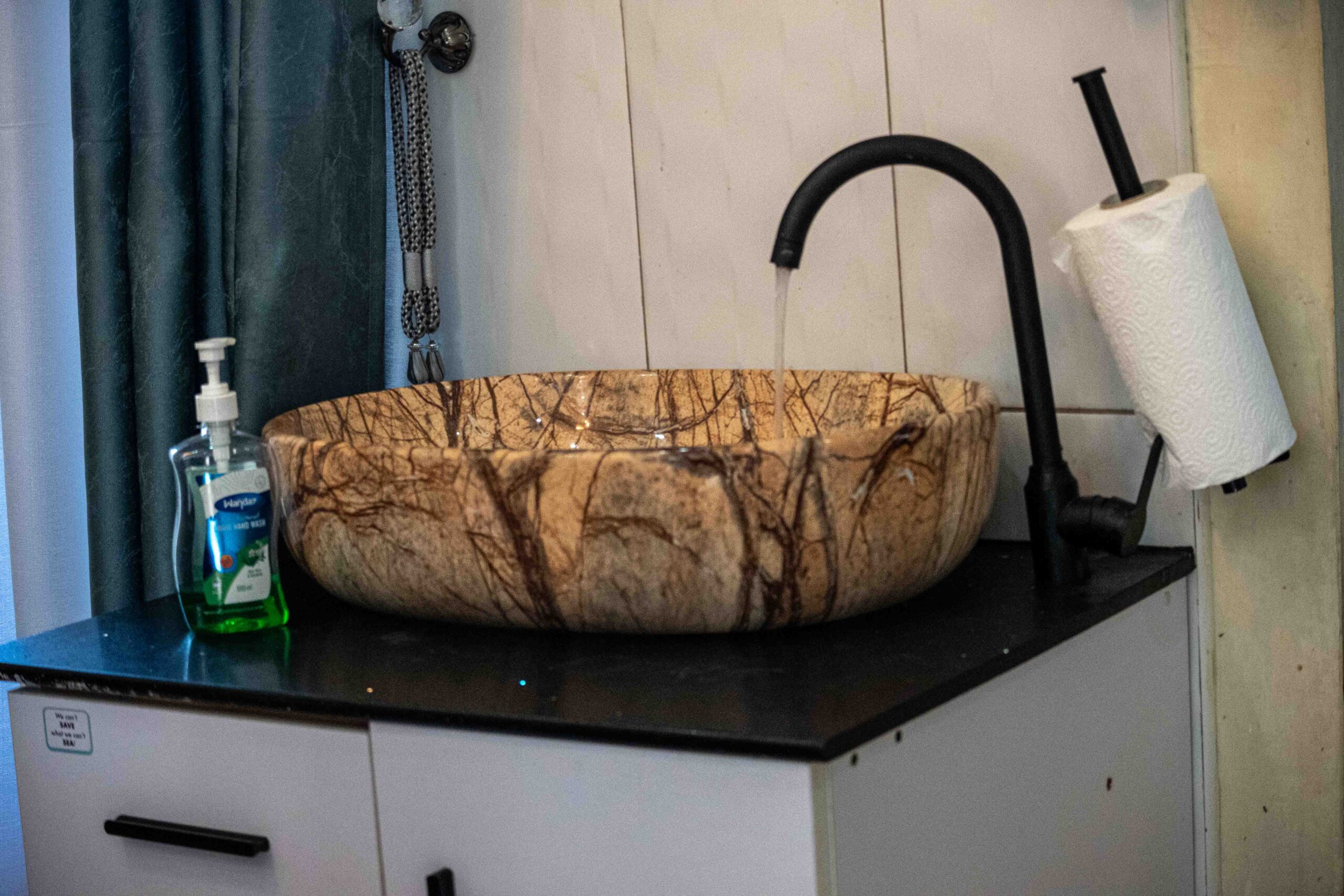
There is a neighbourhood in Mbarara city where almost nobody needs a jerry can.
In Boma, a planned residential area, every household has a tap. There are no springs to walk to, no boreholes to queue at. No family here has ever had to choose between buying water and buying food.
Fred Turyakira, the Local Council One Chairperson of Boma, explains why his explanation reaches back a century.
“We have the biggest water reservoir that supplies the whole of Mbarara city and parts of Ankole right here in Boma,” notes Turyakira, further stressing that, “we do not have springs. We do not have boreholes. We only rely on water supplied by National Water.” Mbarara city has a day population of about 33,000.
Boma was built for Uganda’s colonial administrators, mostly the British officials and settlers who governed the region. They ensured, as colonial administrators did everywhere, that their own homes had reliable water, reliable roads, and reliable infrastructure. The name says it all. “It used to be called ekijungu,” Turyakira reveals. Ekijungu, a Runyankore noun, means a settlement for the whites. ” All the houses here have water. The settlements are permanent,” narrates Turyakira.
Today, Boma is home to about 250 residents. It was planned for people with power, so it has the pipes. It is, in Turyakira’s own words, “a residence for the rich.”
This is not a coincidence. It is a pattern repeated across most towns and cities that the British built or expanded during their rule of Uganda. Colonial urban planning was never designed to serve everyone. It was designed to serve the administrators, the traders, and the settlers. Water, electricity, roads, and sanitation were extended first to the areas where Europeans lived and worked. The communities that surrounded those centers, including the African quarters, the markets, and the villages on the edges, received what was left over, which was often nothing at all.
In Mbarara, just like Kampala, Jinja, and every other colonial-era urban centers, the infrastructure map drawn a century ago still determines who has water today. The pipes laid for British administrators were never systematically extended to the communities living alongside and around them. Although independence came in Uganda in 1962, some pipes have stayed where they were up to now. Only the jerry cans appear in the communities that the pipes never reached.
What makes Boma so instructive is not its water. It is that the communities immediately surrounding it, just minutes away on foot in places such as Kashanyarazi, do not. The colonial planners built infrastructure for themselves. They built it in a way that created a permanent divide between the served and the unserved, the planned and the unplanned. That divide, between Boma and the communities around it, is not ancient history. It is the water inequality of today, still running along the same lines that colonial administrators drew a hundred years ago.
Setting Down the Jerry Can for Good
At the heart of Uganda’s water crisis is not scarcity; it is infrastructure inequality. As Dr. Maha puts it, the problem is not the resource. Uganda has the water. It has rivers, lakes, rainfall, and reservoirs. What it does not have is the infrastructure, such as enough treatment plants and pipelines, among others, that turns those resources into sources that reach everyone equally. The gap between the resource and the source is where the inequality lives. And it is a gap that is not natural. It is constructed by decades of investment decisions that prioritized some communities over others and called it development.