Fredric Mugira
Across rural Uganda, the burden of water insecurity weighs most on children. In places without piped water at home, collecting water is not just a chore. For many children, it shapes their entire childhood.
This collection shows what daily life is like for children affected by poor water infrastructure. Toddlers take their first steps carrying small jerrycans, while older students balance heavy water containers and schoolbooks as they walk along rocky paths. At busy spring wells, some children revise their books while waiting in long lines.
These photographs show the real impact of unequal access to resources. Every day, children give up time for school, play, and their health just to fetch water for their families.
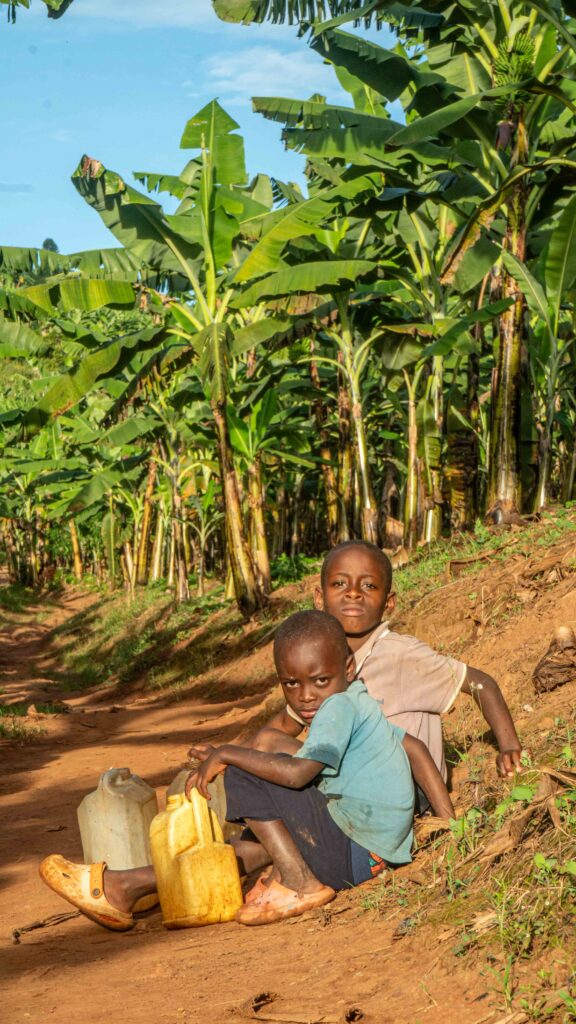
Pausing in the Plantation
Location and Context: Rwampara district, Rural Plantation Path
Two young boys rest by their jerrycans on a dusty path through a banana plantation. In rural areas without piped water, children often have to carry heavy containers over steep ground to fetch water for their families.
Siblings on the Footpath
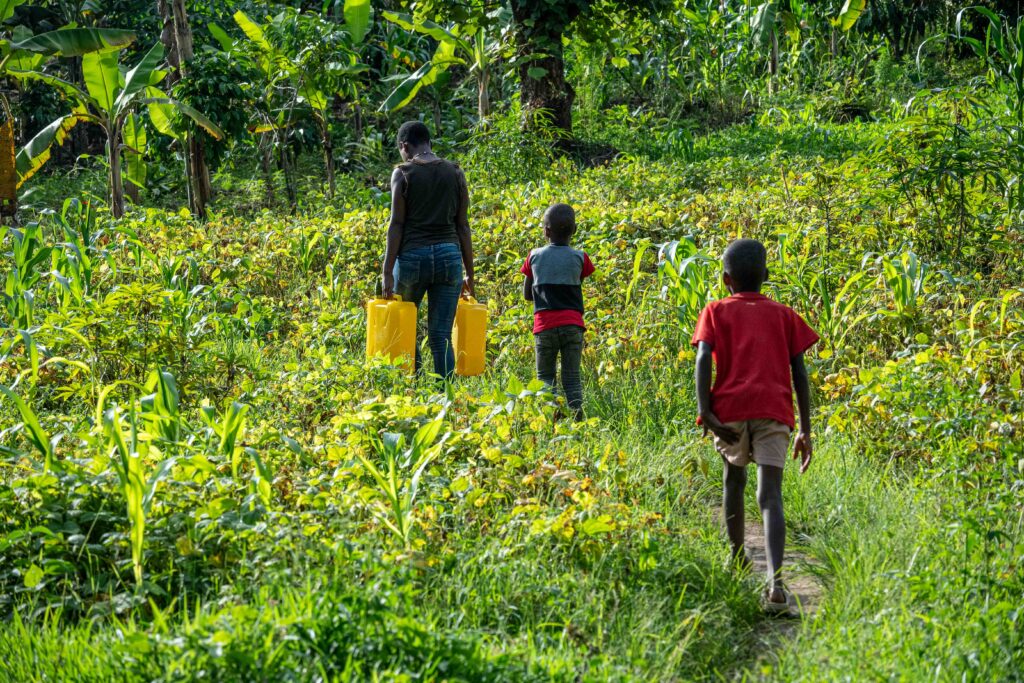
Location and Context: Sheema district, Agricultural Footpath
A girl and two young siblings walk along a narrow, overgrown footway through cultivated fields, carrying filled yellow jerrycans back to their home. Without localized distribution networks, rural families spend hours every day transporting water on foot across long distances.
Improvised Stoppers
Location and Context: Rwampara district, Protected Spring Collection Point
A schoolboy bends over a concrete spring basin crowded with yellow and white jerrycans, positioning containers to collect clean water. Local residents insert banana stalks into the openings as makeshift stoppers to prevent spillage on the journey home. This illustrates manual adaptations forced by systemic water infrastructure deficits.

Studying in the Queue
Location and Context: Rwampara district, Community Water Intake Point
A pupil in a school uniform reads from a text book while sitting on the edge of a concrete water collection platform while waiting for jerrycans to fill. The extensive time required to queue for water directly encroaches on time needed for schooling. This is how water insecurity disrupts child development and educational attainment in most rural parts of Uganda and several other countries in the global south.

Bottleneck at the Spring
Location and Context: Rwampara district, High-Density Rural Water Point
A large group of children and adults gather around a single concrete water spring intake surrounded by dozens of lined-up jerrycans. Severe shortages of clean public water points force entire neighborhoods to cluster around single sources. This creates long wait times that disrupt daily domestic and economic life.

First Steps with Jerrycans
Location and Context: Jinja, Village Roadside Access Point
A young toddler holds an adult’s hand while carrying a small yellow jerrycan along a grassy roadside. From early childhood, children in water-stressed households are introduced to the routine of water collection, showing how infrastructure gaps shape early upbringing.

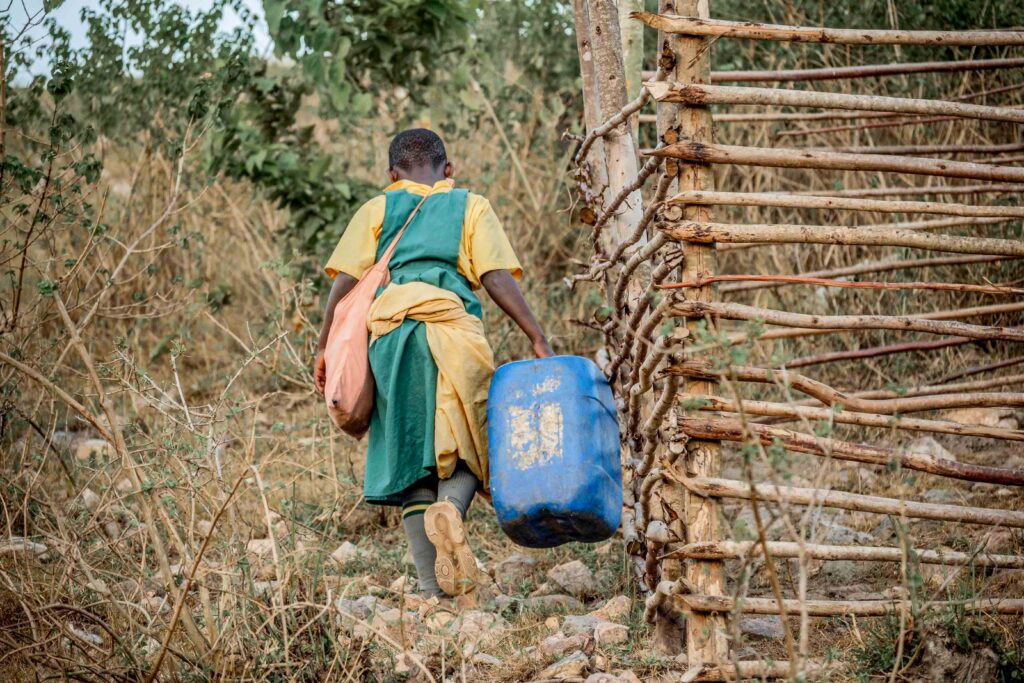
Books and Jerrycans
Location and Context: Mbarara city, Rural Commute Path
A school girl in her uniform walks along a rough, rocky path next to a wooden fence. She carries a blue 20-liter jerrycan and a school bag filled with books. For many girls in water-stressed communities, long walks to school combined with carrying heavy water show the extra challenges they face because of their gender.
Solitary Journey
Location and Context: Isingiro district, Plantation Access Route
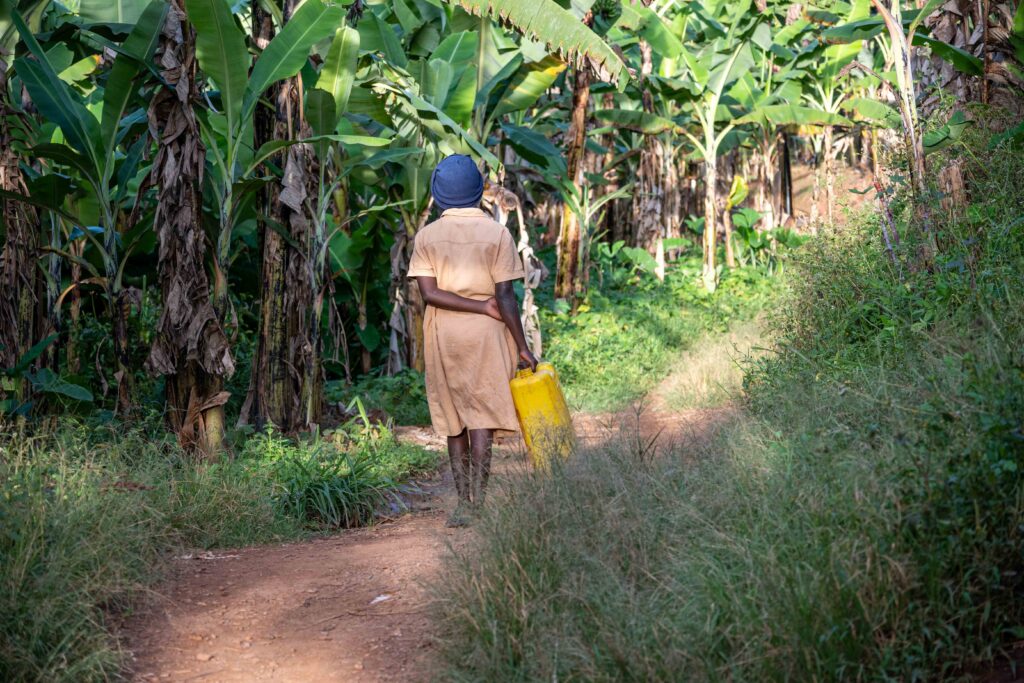
A young girl with a yellow jerrycan walks by herself along a path through a thick banana plantation. In rural parts of Uganda, collecting water for the home is a daily solitary task that takes a lot of time and effort.