
Fredrick Mugira
The River Nile has always been seen as a lifeline for millions in the Nile basin. However, in Jinja, not everyone has equal access to its waters. This collection shows visual evidence of how the riverbank is changing quickly. High-end tourism and large industrial projects now take over the best waterfront areas, forcing local communities further away.
This exhibition uses clear visual contrasts to show how social and economic power divides the river. By putting these different realities side by side, the collection prompts viewers to look past the beautiful scenery and consider an important question: When a river becomes a commodity, who gets to enjoy it, who benefits, and who is left behind?
Living in the Shadow of Luxury
Location and Context: Jinja, Opposite Banks of the River Nile
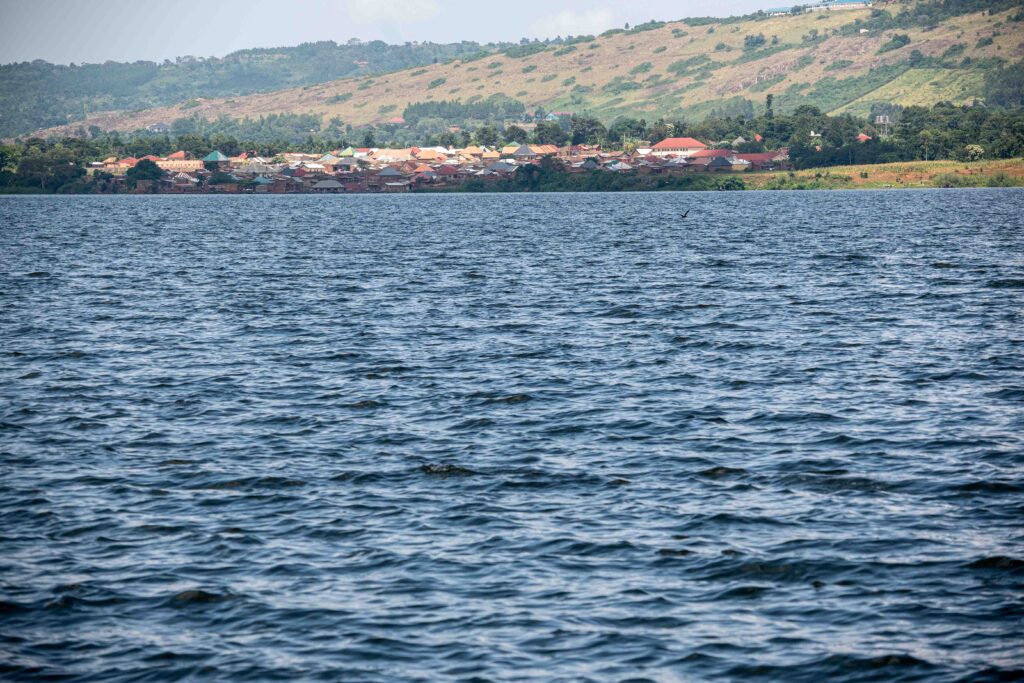

These two images, taken from nearly opposite sides of the river, show the socioeconomic divide along the Nile in Jinja. On one side, a commercial resort has turned the shoreline into shaded seating areas and private green spaces for paying guests. Across the water, a crowded informal settlement reaches down to the river’s edge, where low-income residents live. Only a short stretch of water separates these two scenes that show how luxury tourism and difficult daily life exist side by side along the Nile.
Industrial Power and Hand-Cast Nets
Location and Context: Jinja, River Nile
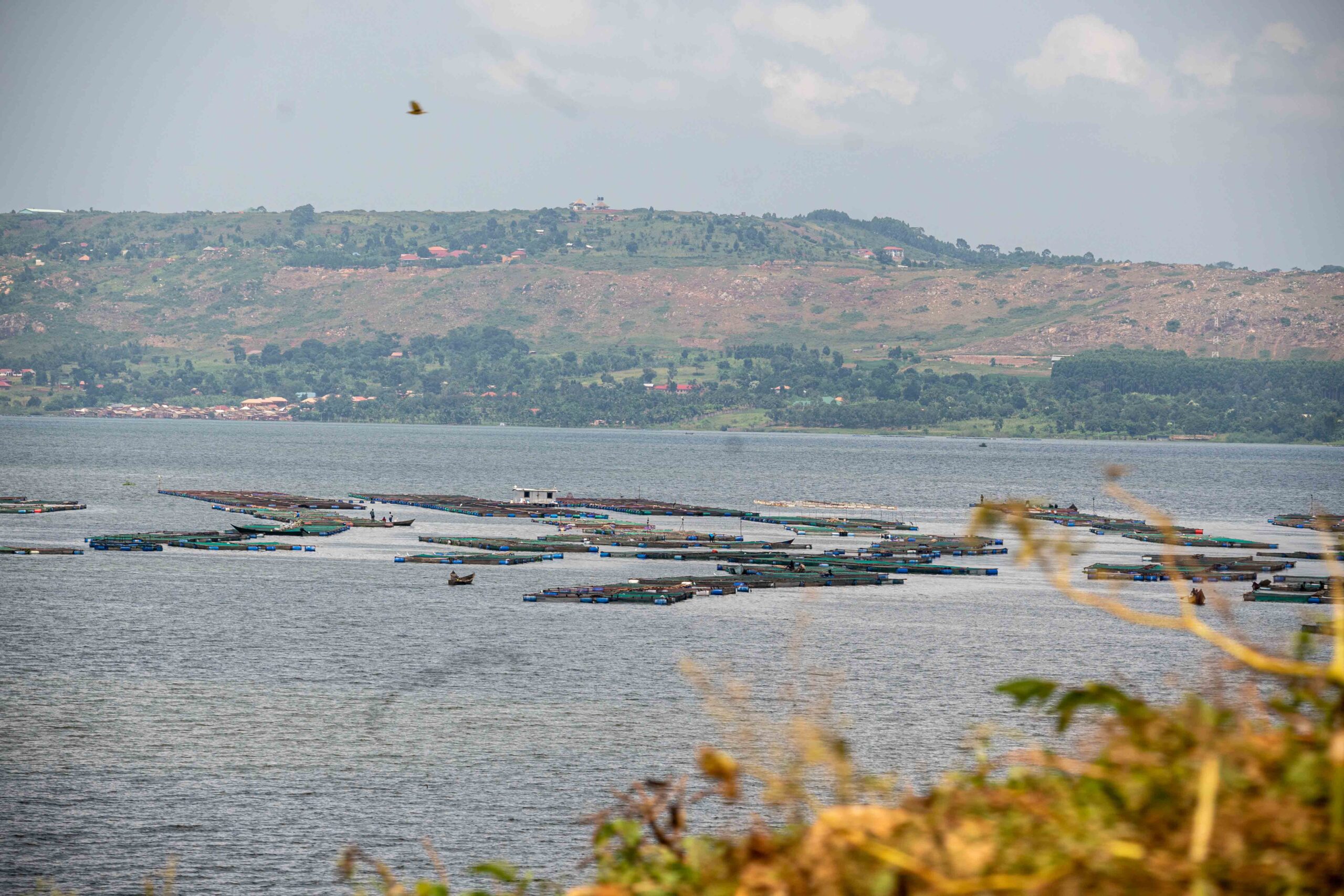
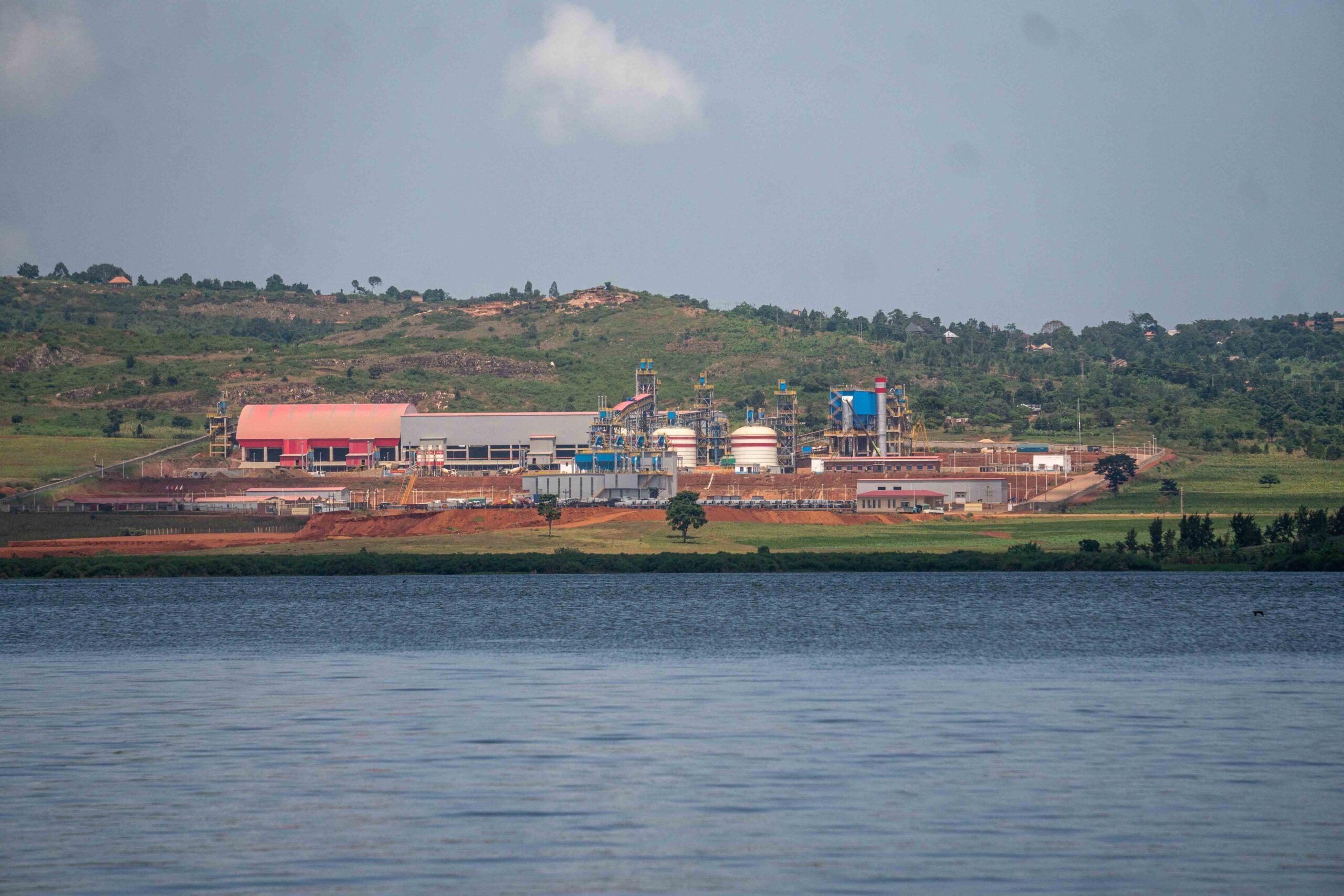
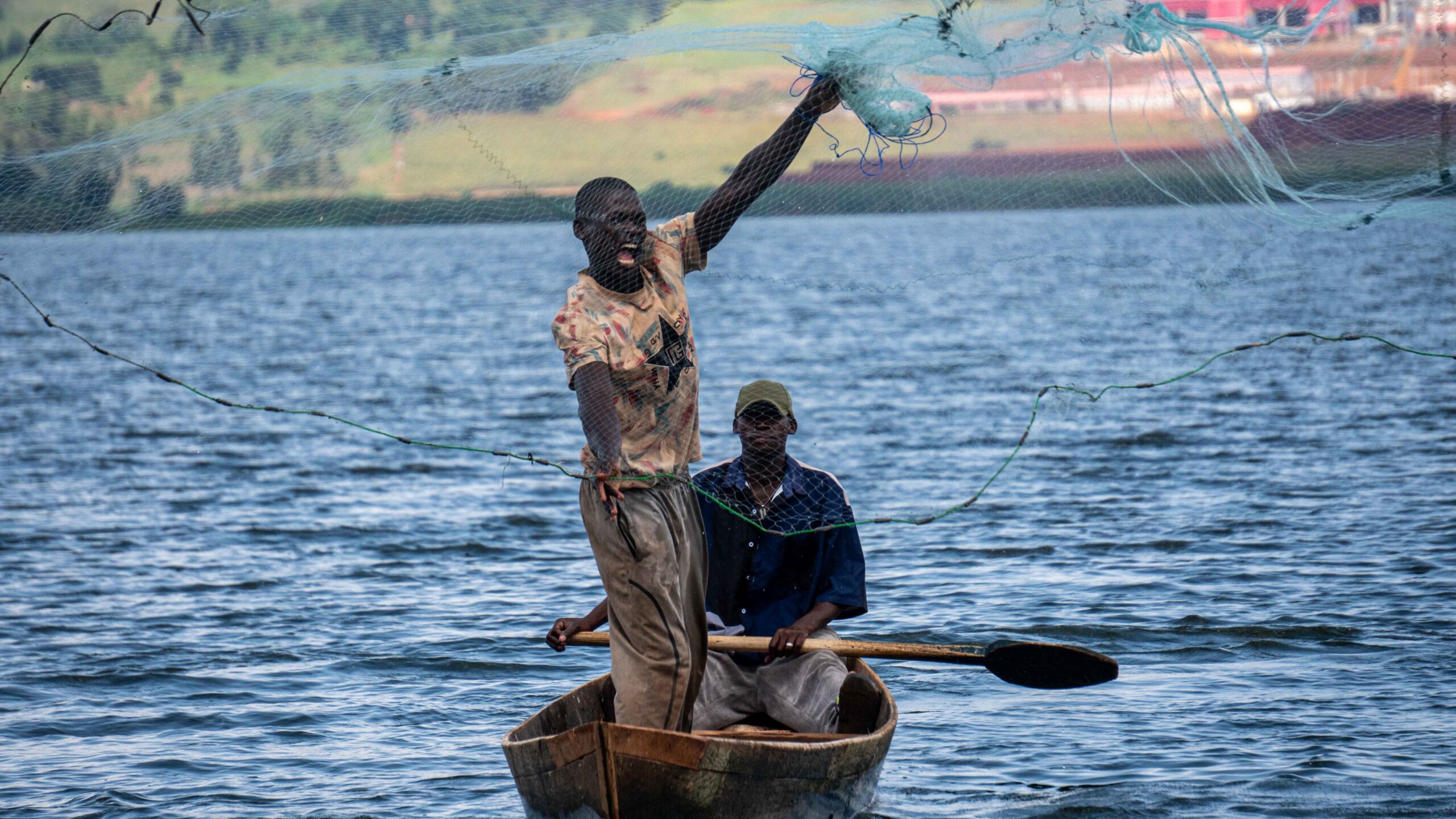
On one side of the River Nile, large factories and commercial fish cages take up much of the river, using its water and space on an industrial scale. Out on the water, local fishermen paddle simple wooden canoes and work hard to throw their hand-woven nets into fishing areas that are getting smaller. While big companies claim the best spots along the river, local fishers have to work even harder with their traditional tools to earn a living from the same river.
Divided Uses of the Nile
Location and Context: Jinja, River Nile Tourism Sites
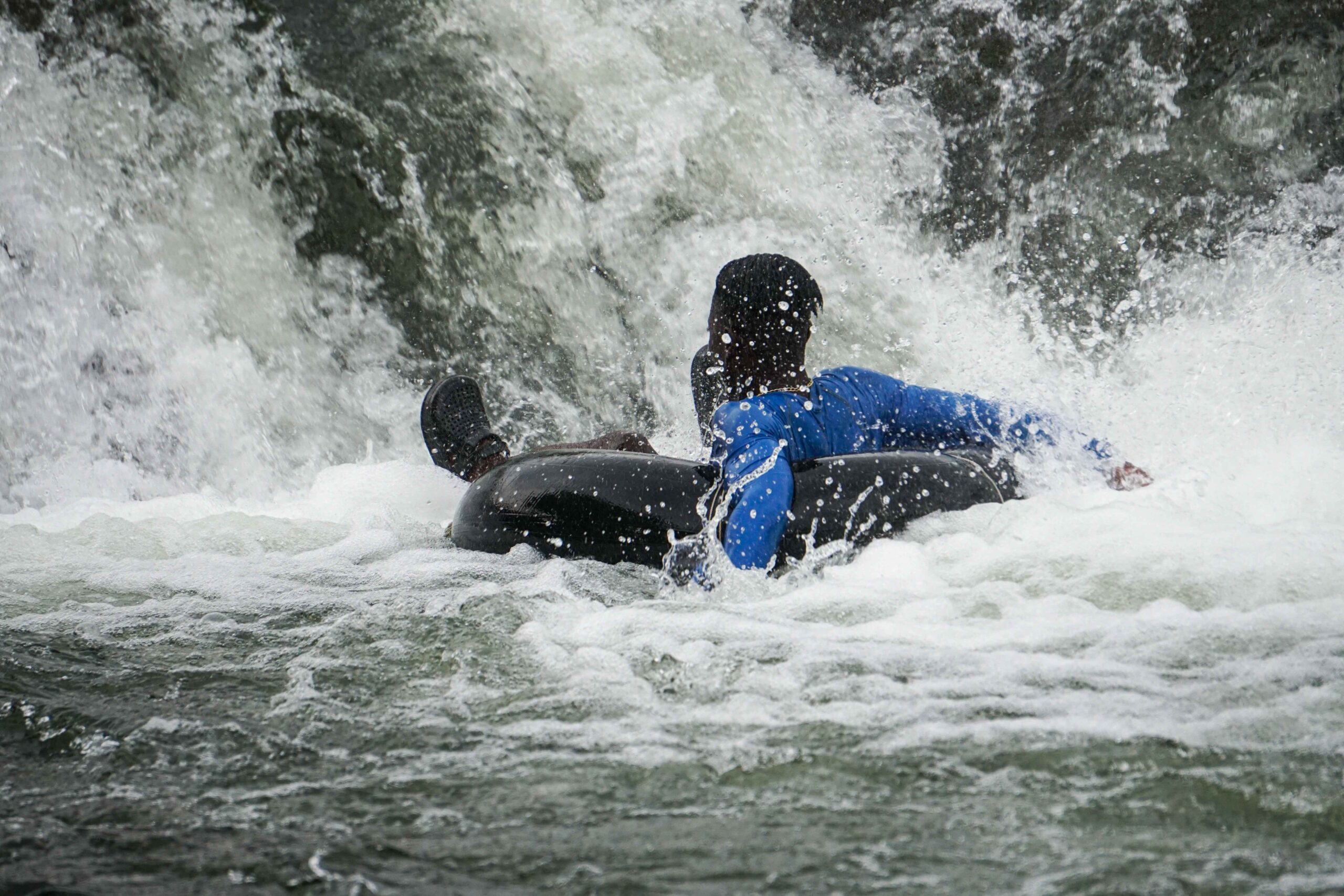
A tourist rides an inner tube through the rapids of the River Nile at Busowoko Falls. Just downstream, local residents use the exact same river to scoop raw water into heavy jerrycans for drinking, cooking, and washing. One group consumes the river for leisure and entertainment, while another relies on it for basic daily survival.
Labor on the Shore, Leisure on the Water
Location and Context: Jinja, River Nile Shorelines and Recreation Points
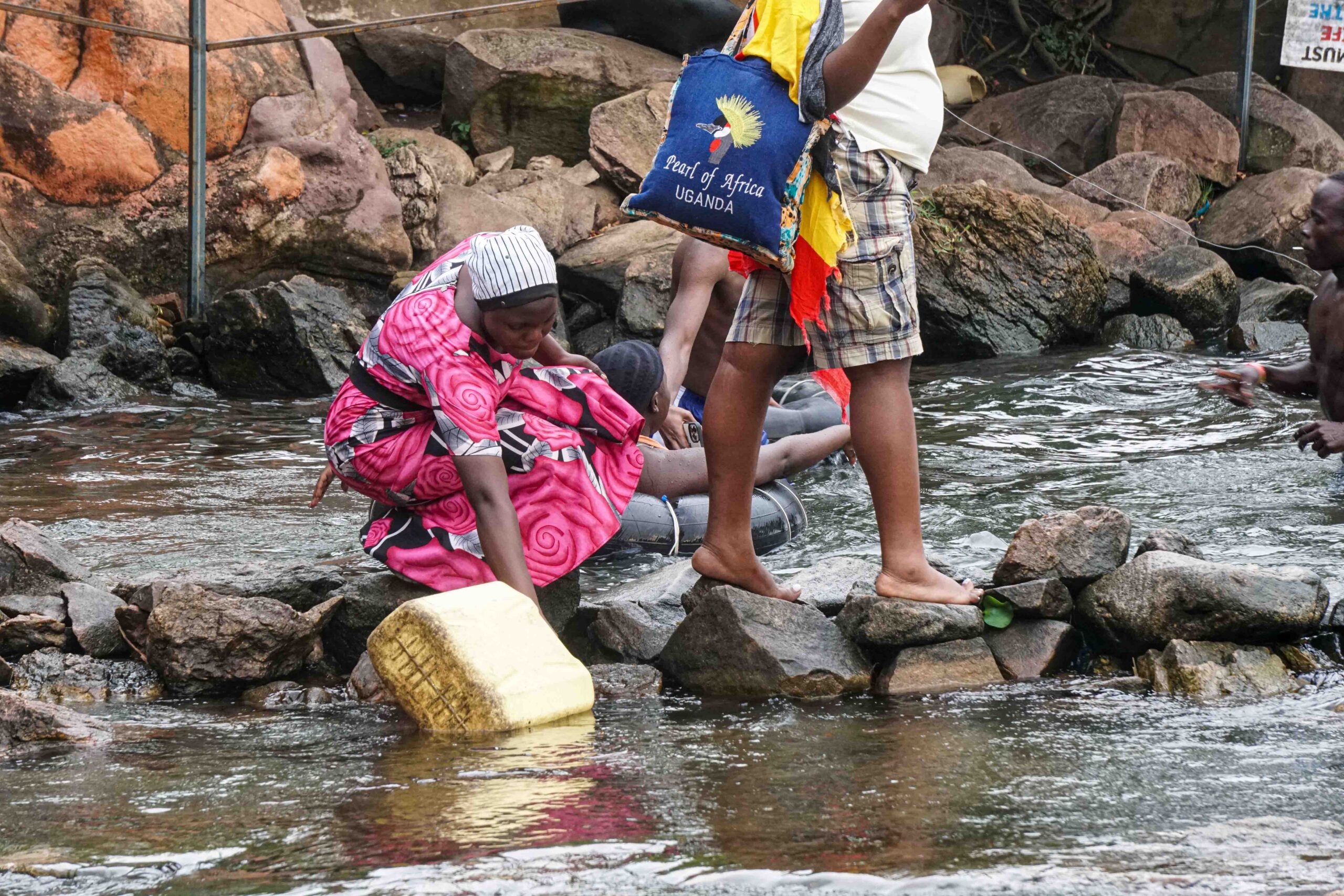
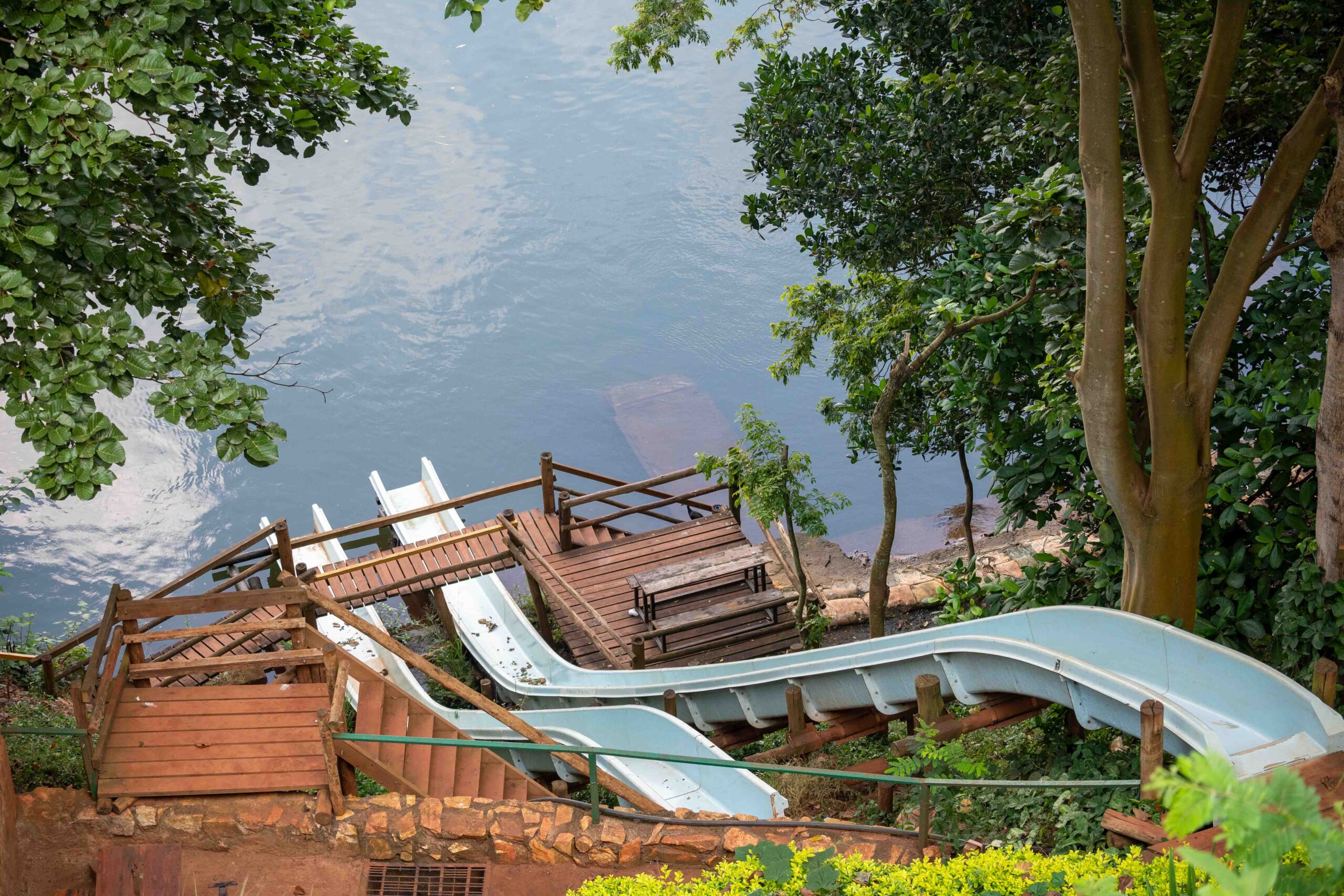
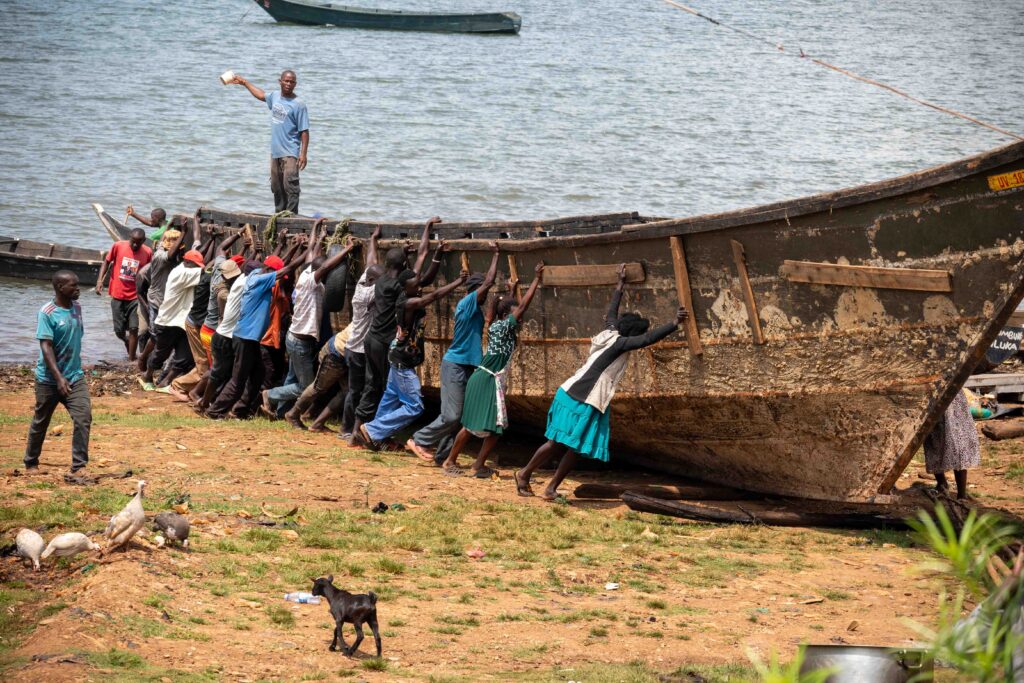

The Nile shoreline serves two different populations concurrently. For tourists and visitors, the river’s swift currents and scenic banks offer high-value sport, inner-tubing, and leisure retreats. For local residents at nearby landing sites, the same shoreline requires spirited physical labor, from manually hauling heavy wooden vessels out of the water, to doing daily laundry on open banks. One group experiences the river as an escape; the other depends on it through daily physical toll.
Handwashing in the Nile
Location and Context: Masese Landing Site, Polluted Shoreline
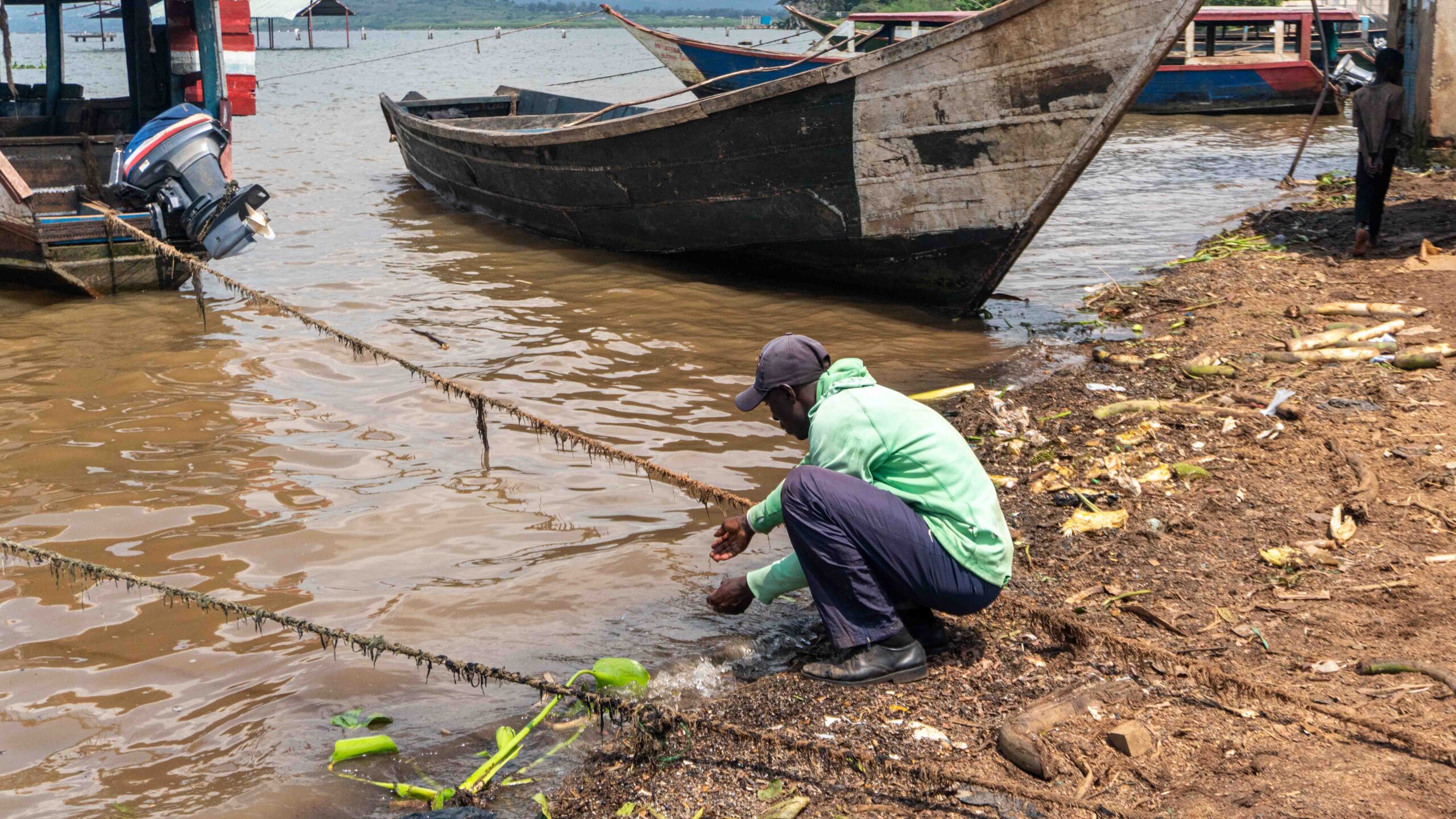
A man bends on a littered muddy bank to wash his hands directly in the waters of the Nile, right beside tethered motorized boats. Without free access to running water or sanitary wash stations at shoreline landing sites, workers and local residents rely on untreated, potentially contaminated river water for basic daily hygiene.
Water for Leisure, Water for Life
Location and Context: Busowoko, Jinja, Shared River Access Point
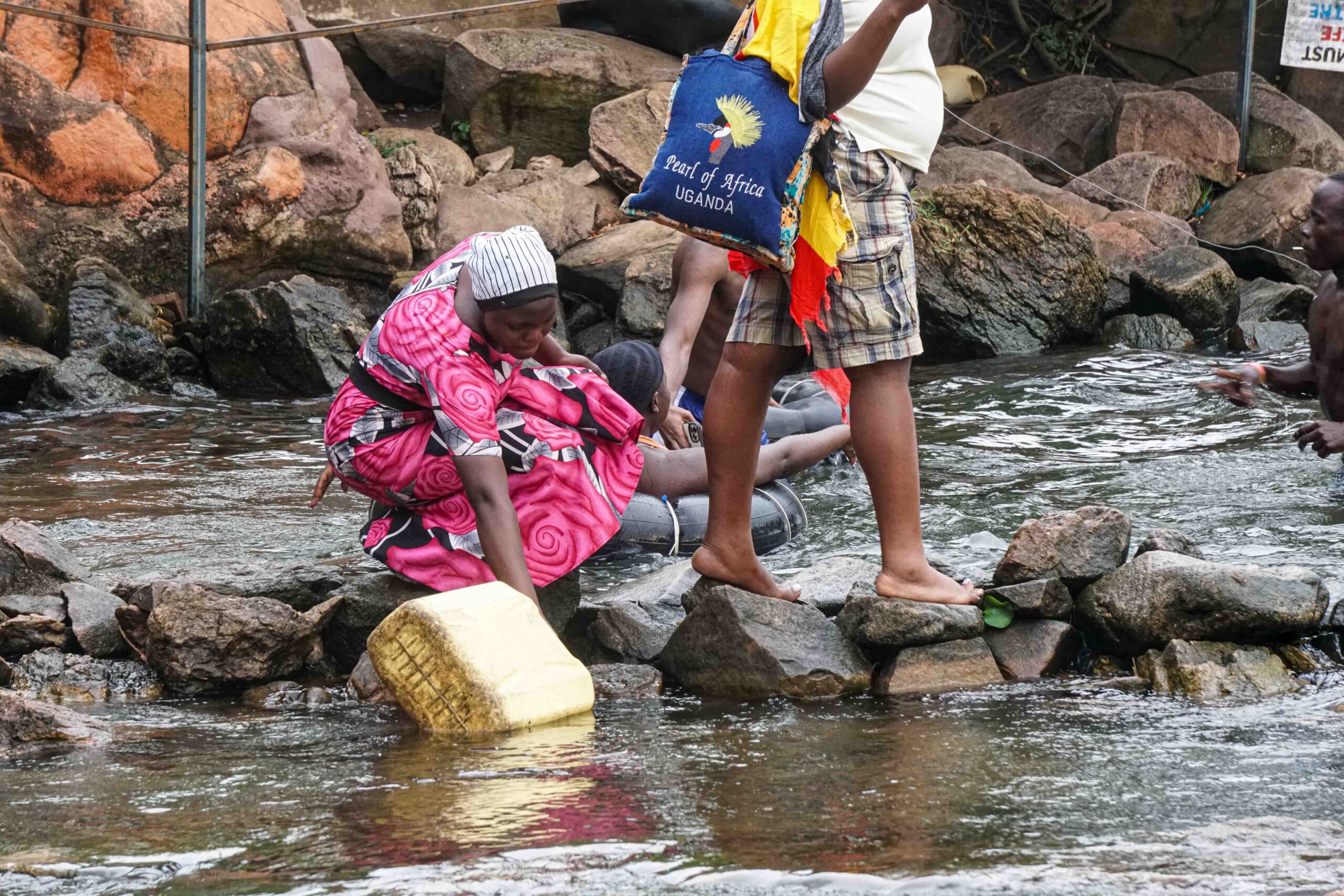
A woman bends at the rocky river edge to scoop water into a yellow jerrycan while visitors walk nearby. The Nile serves simultaneously as a place of leisure for visitors and a source of daily survival for local residents.
Shared Effort at Masese Landing
Location and Context: Jinja, Shoreline Landing Site
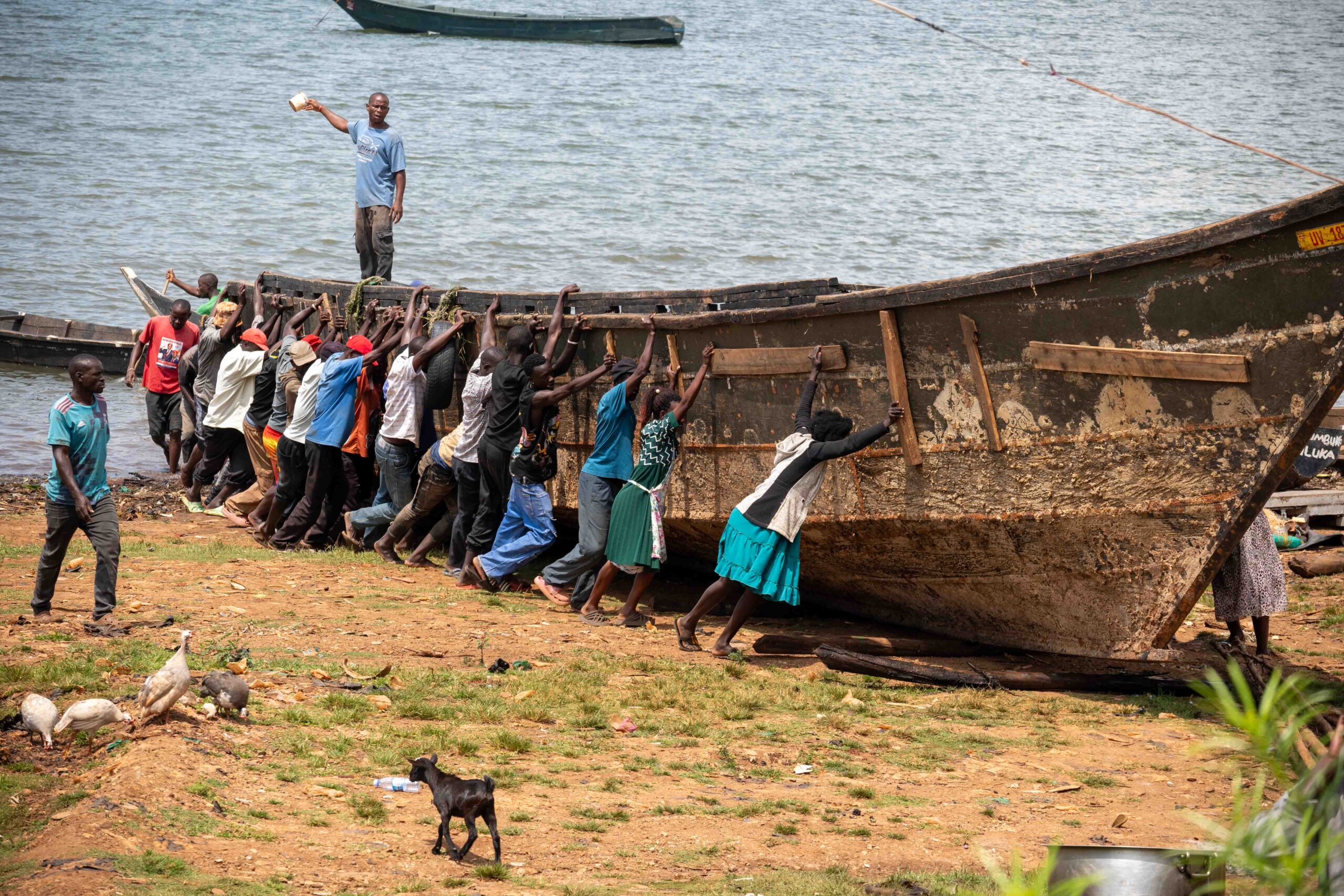
Men and women gather on the shoreline of the Nile at Masese landing site to push a massive wooden boat out of the water by hand. Local shore communities depend on intense physical labor and community cooperation to maintain their traditional fishing activities without heavy machinery.